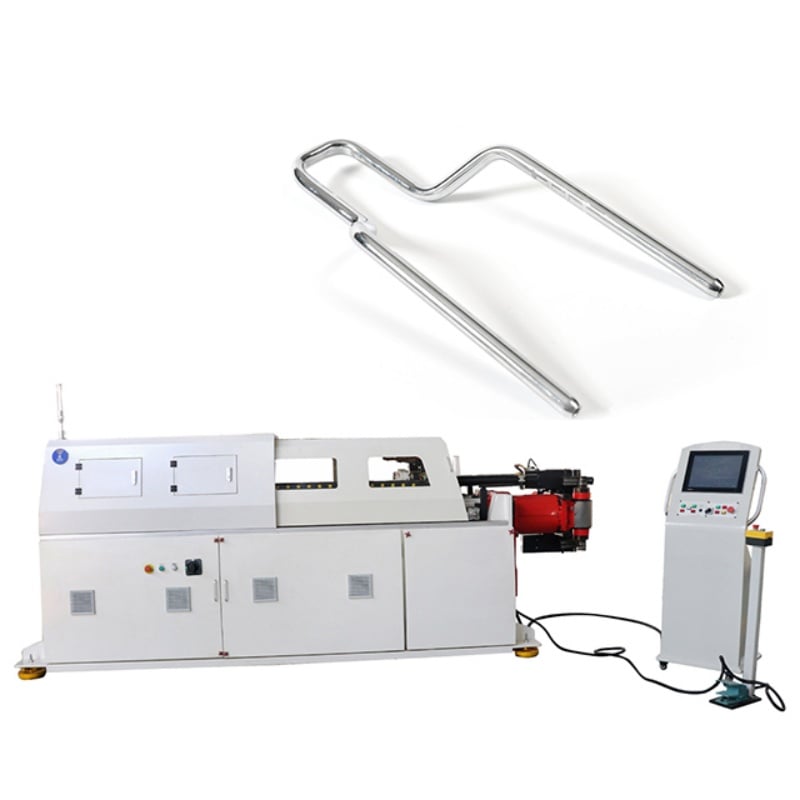
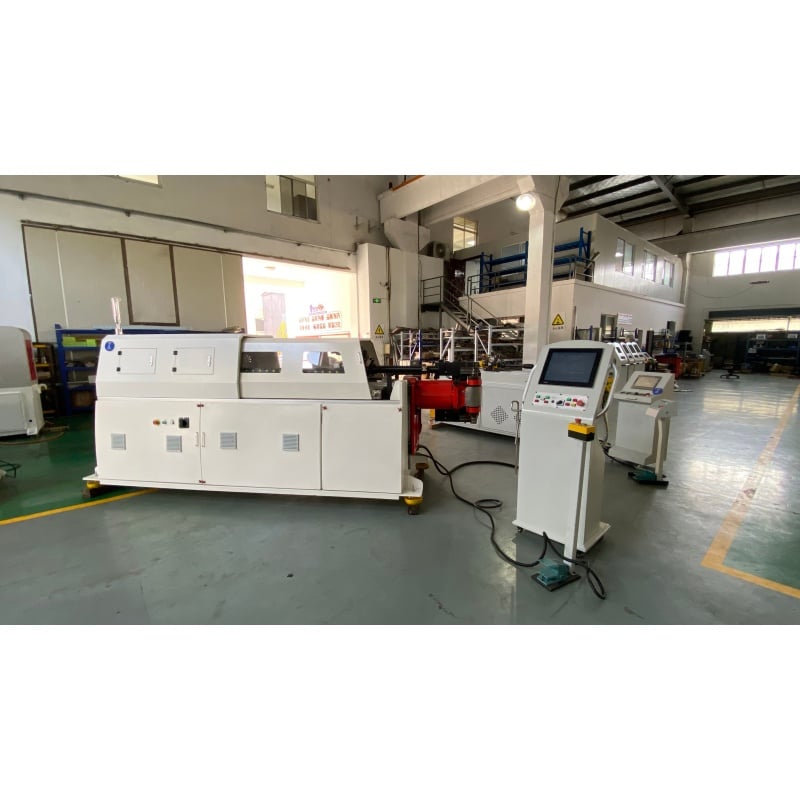
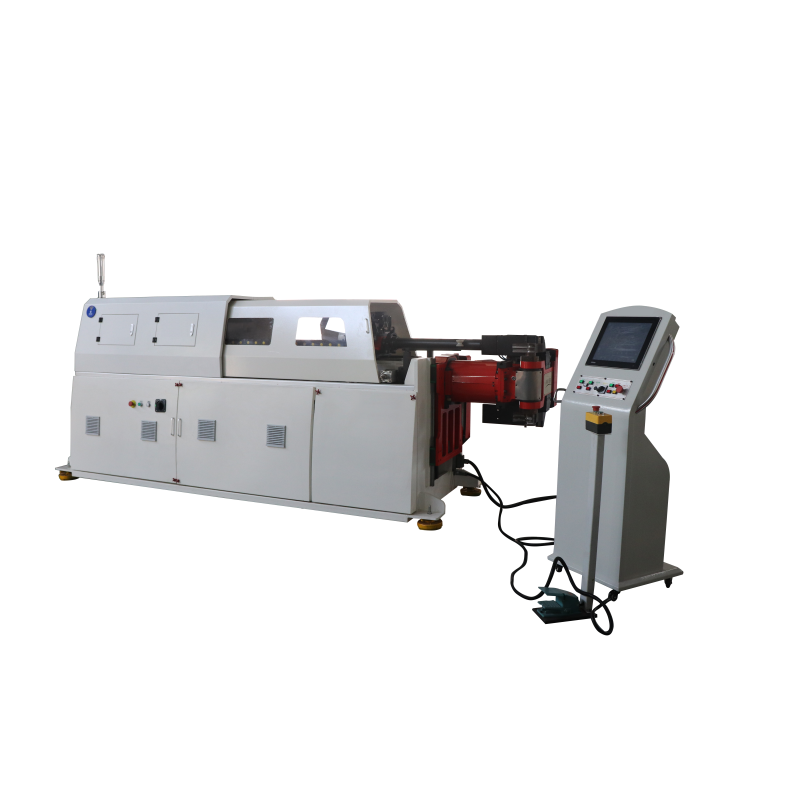
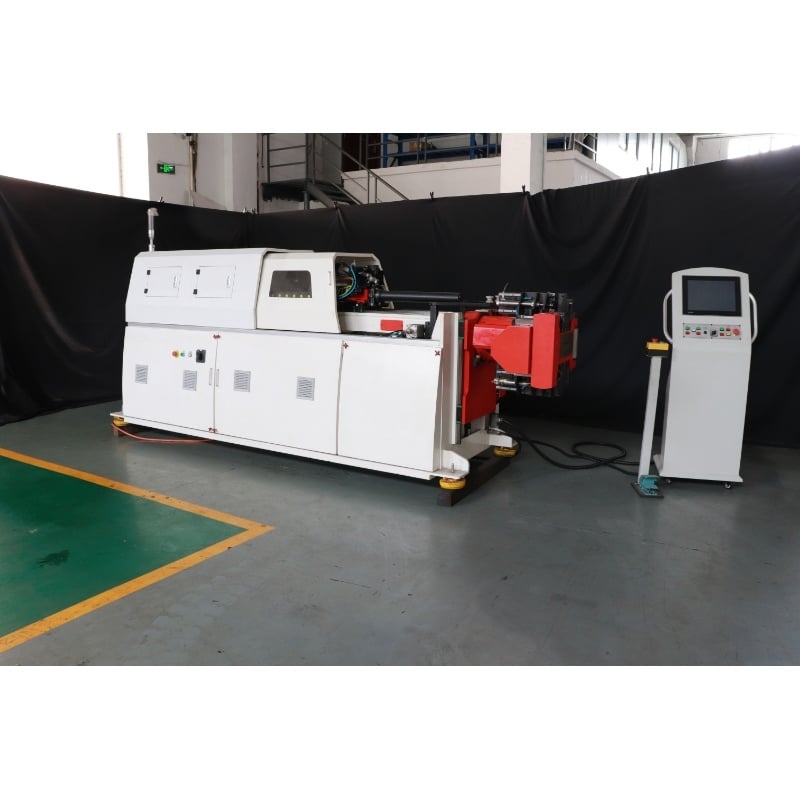
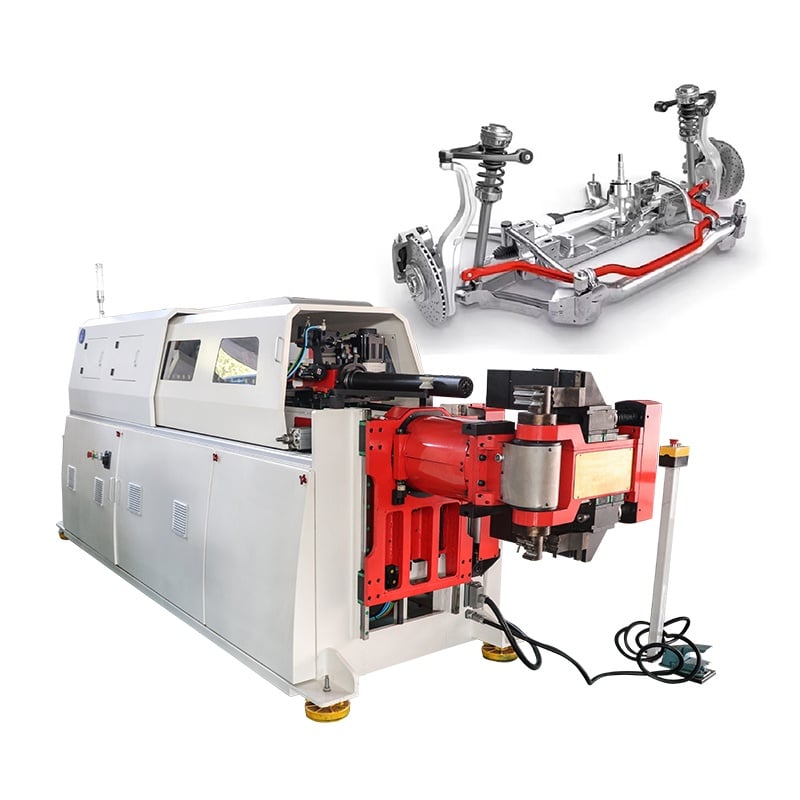
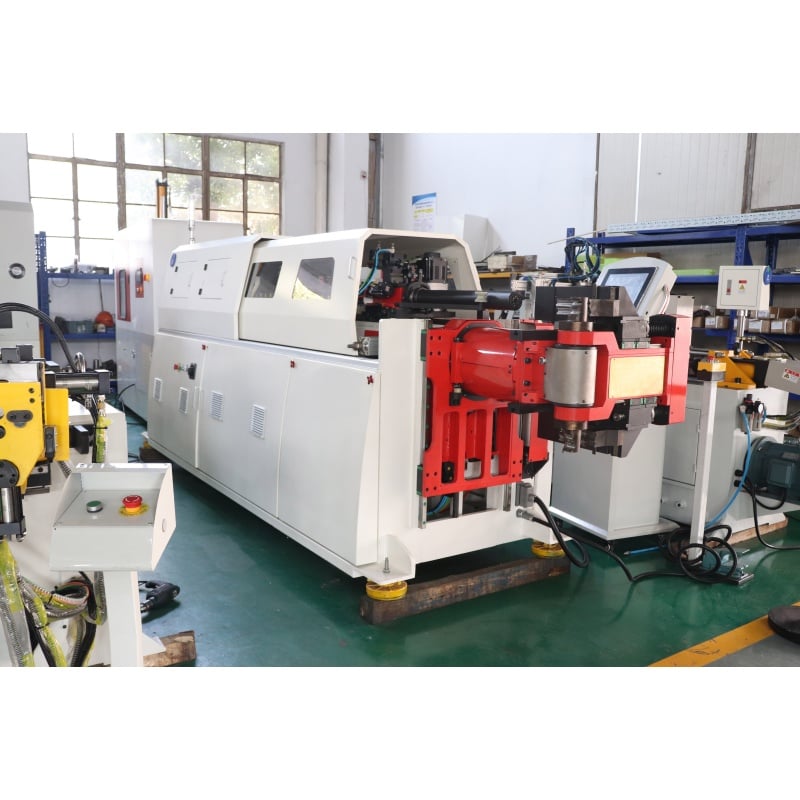
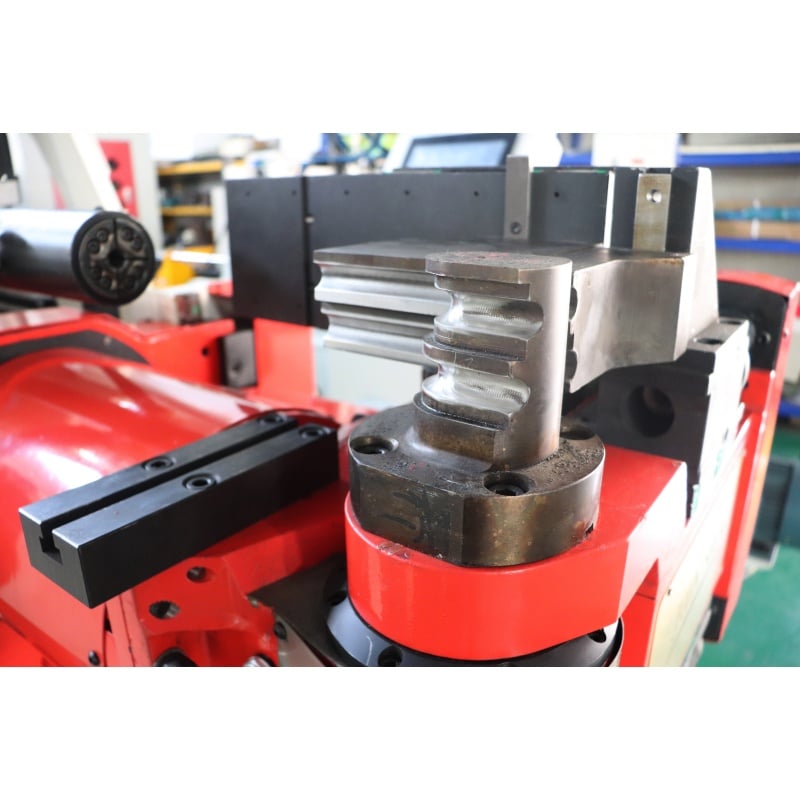
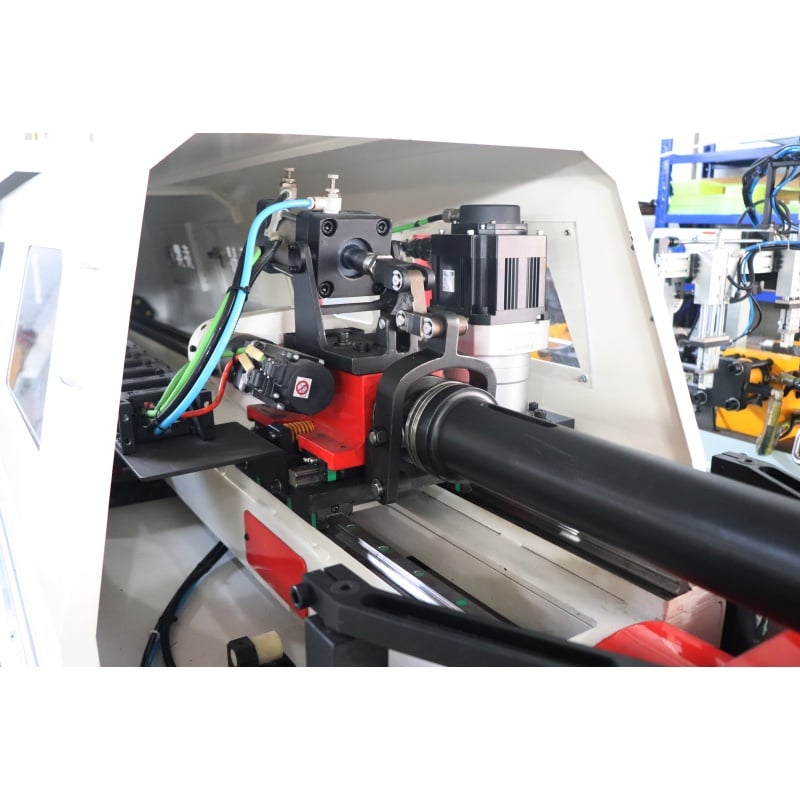
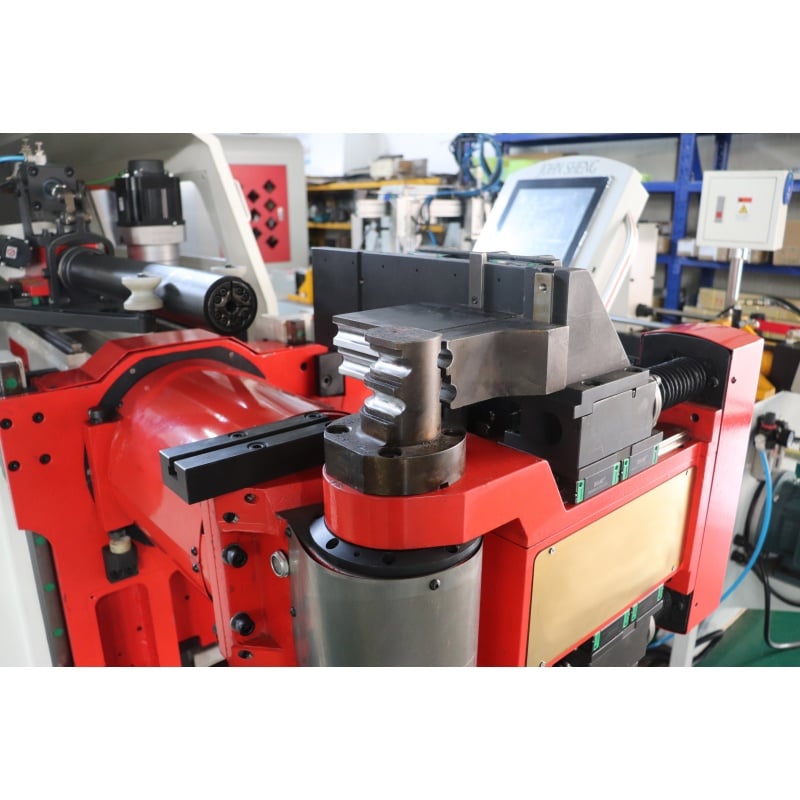
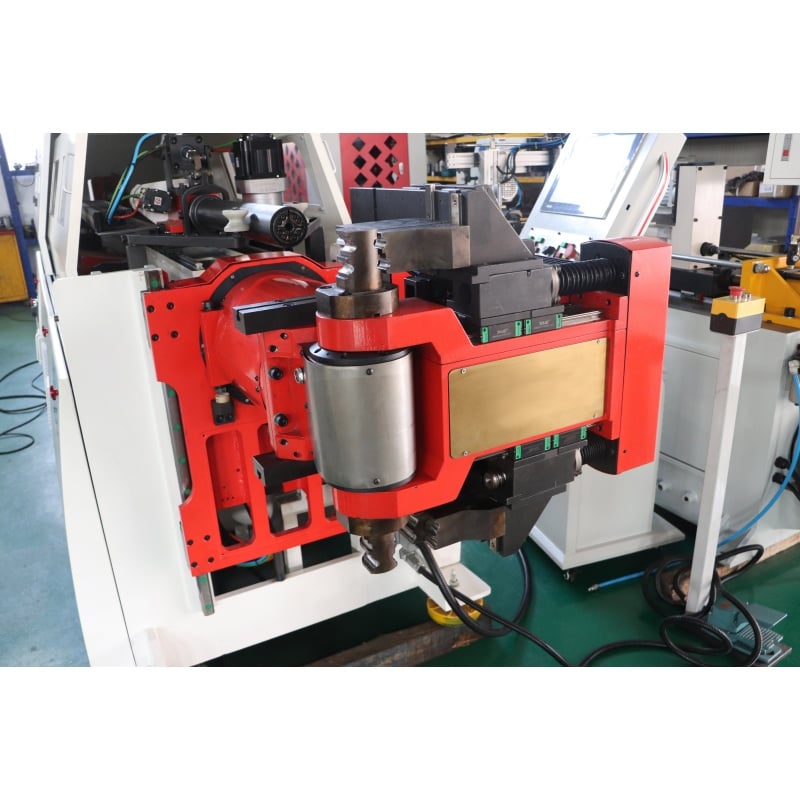
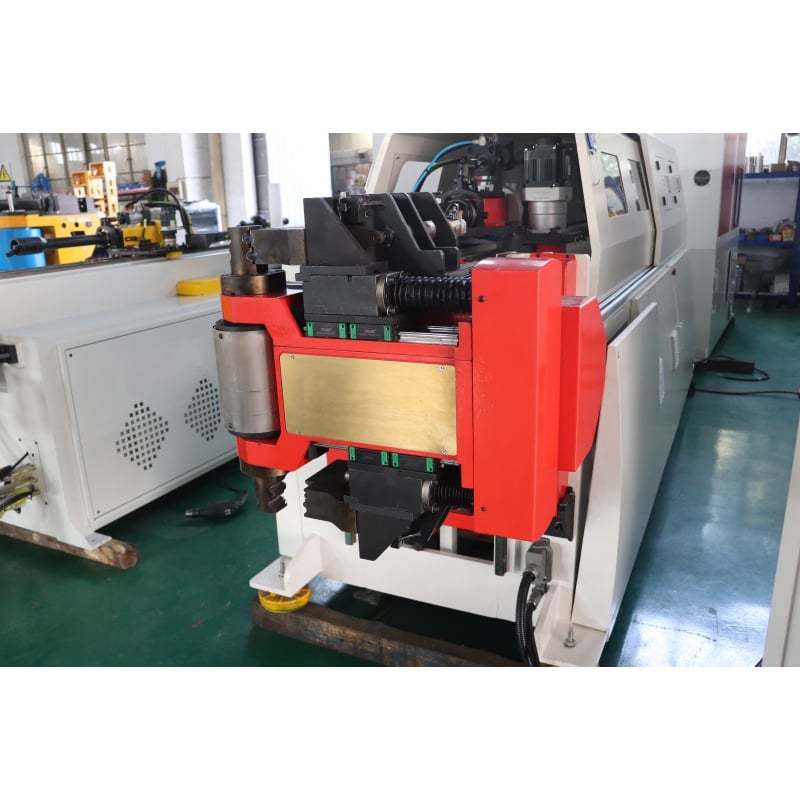
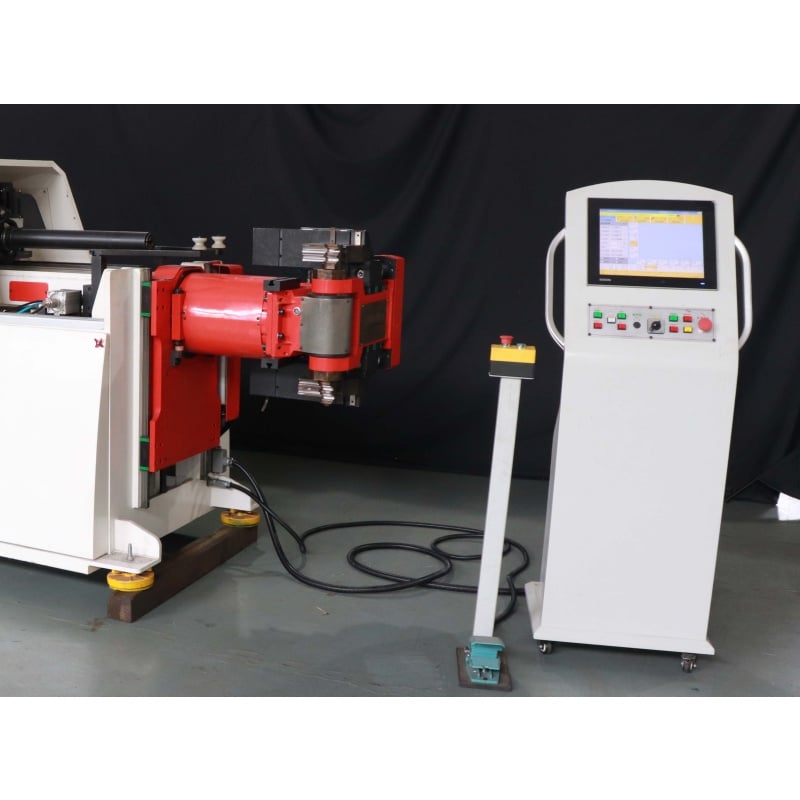
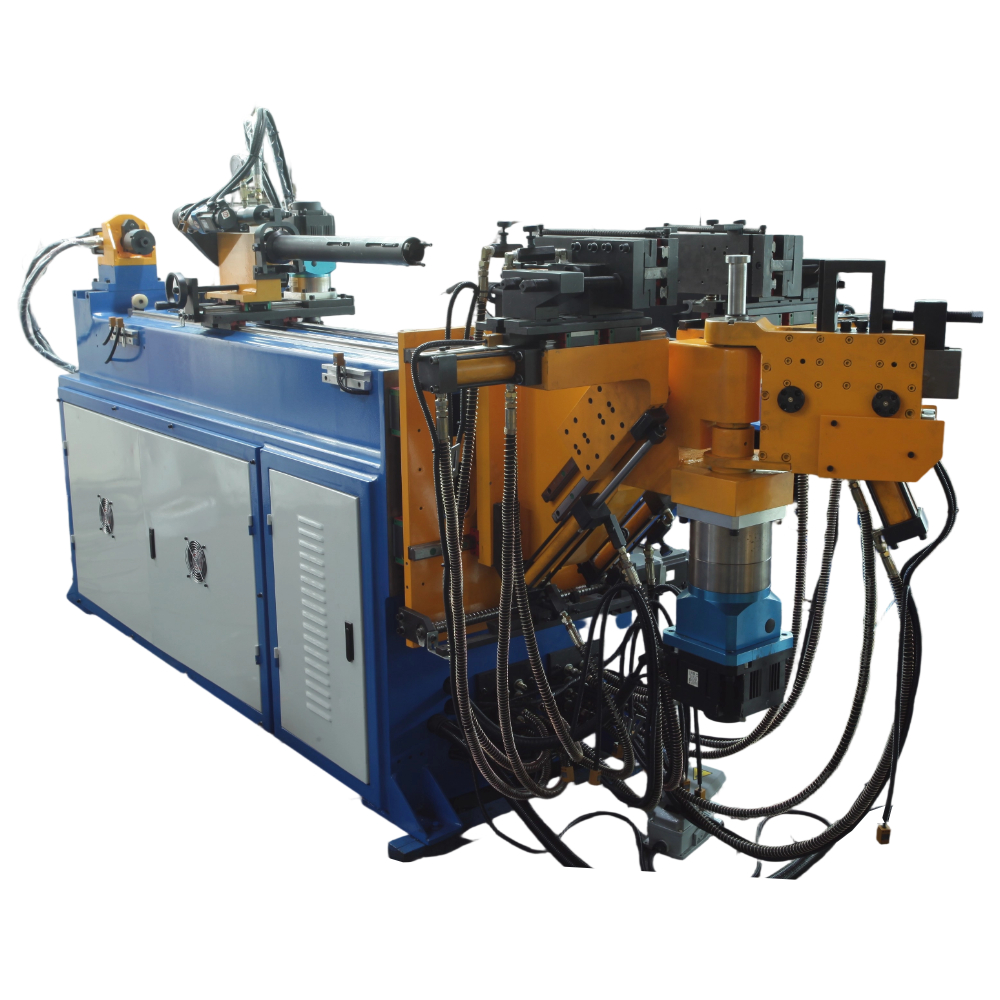
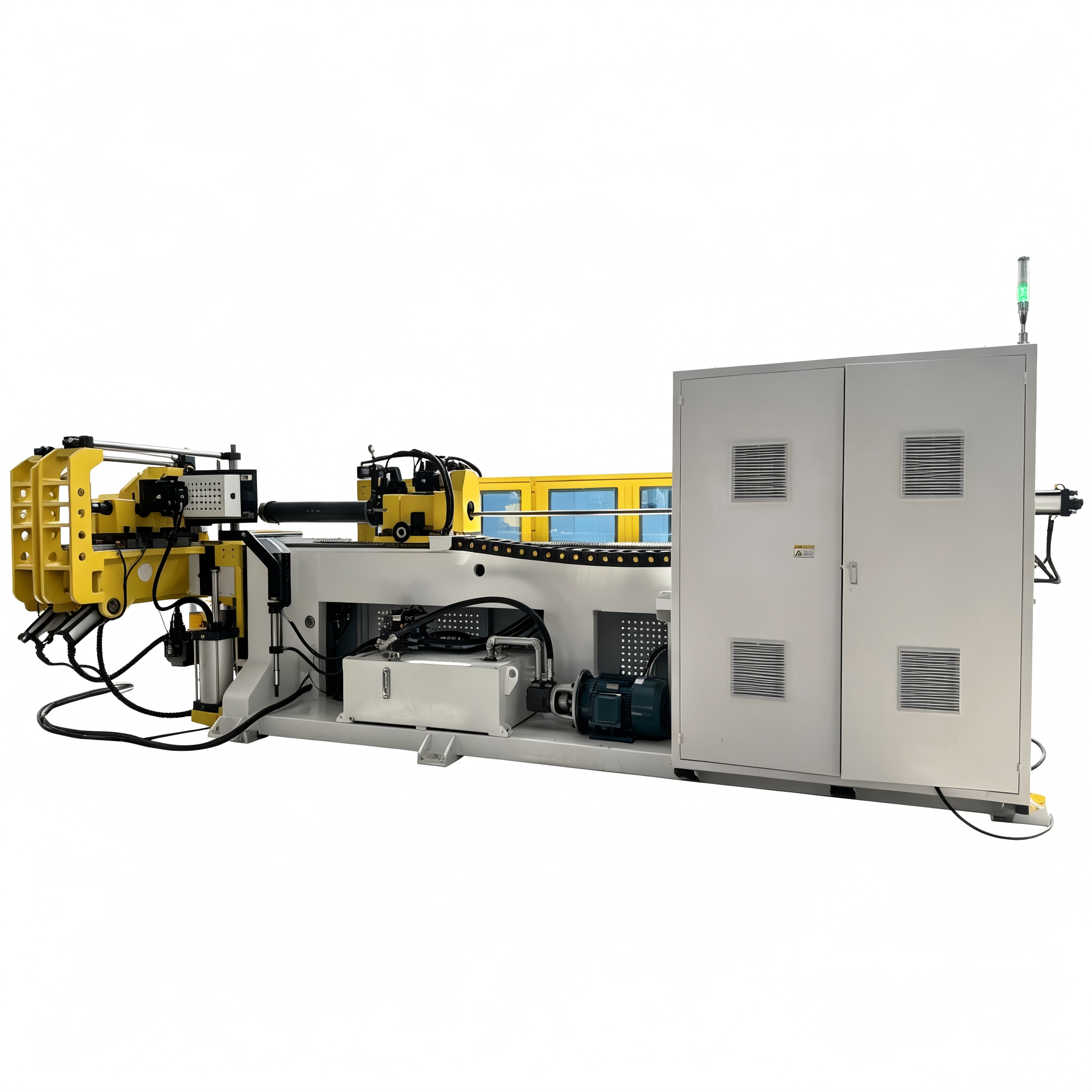
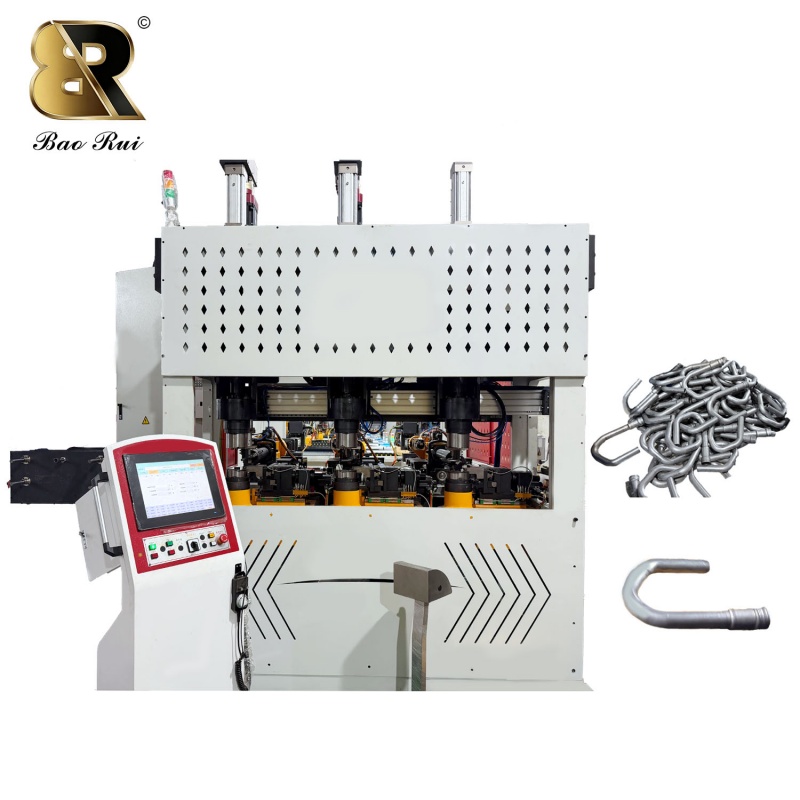
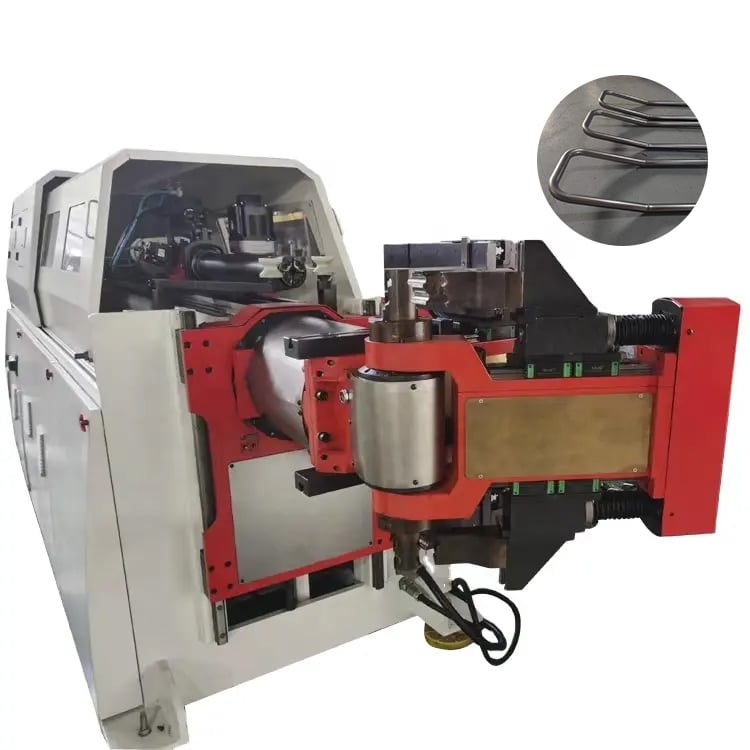
The 360° rotary bending head allows flexible adjustment of the bending direction, making it suitable for tubes with multi-directional and complex geometries.
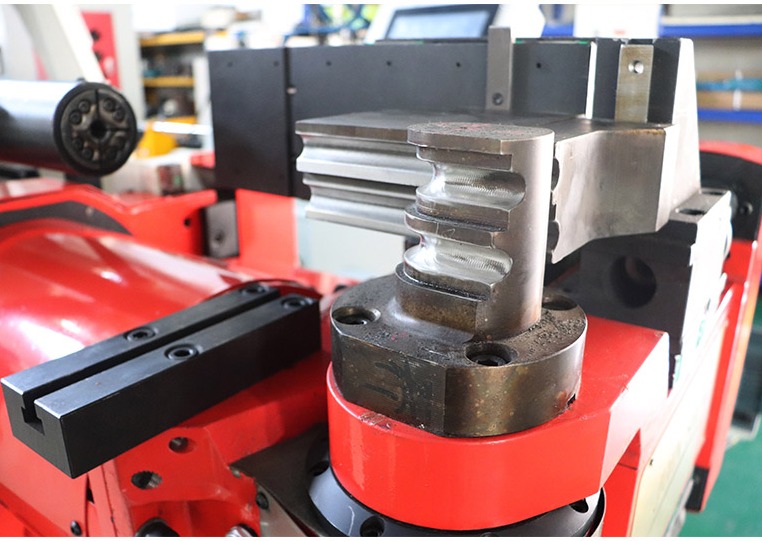
The rotary head helps reduce repeated clamping and repositioning, shortening setup time and improving overall production efficiency.
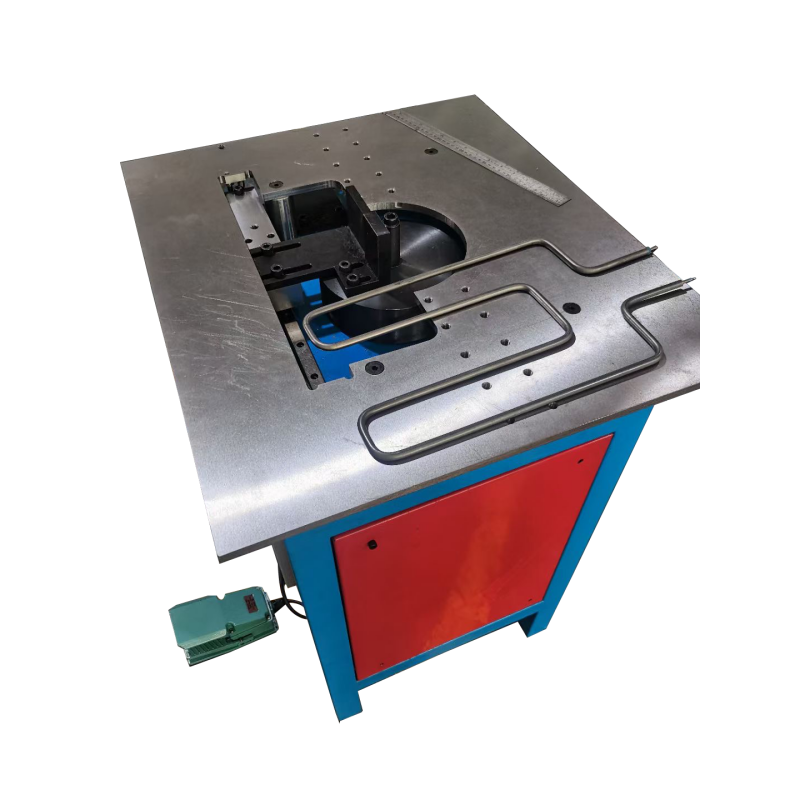
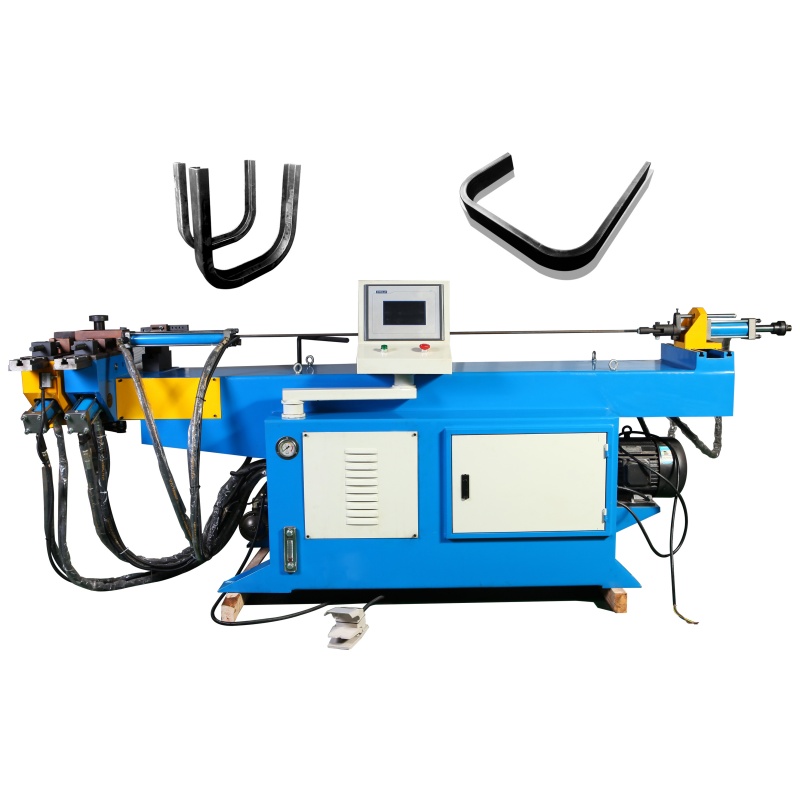
The machine is suitable for automotive tubes, exhaust pipes, hydraulic tubes, furniture components and other products requiring multi-angle bending.


Stable machine movement and a standardized bending process help maintain consistent bending directions and forming results across different production batches.
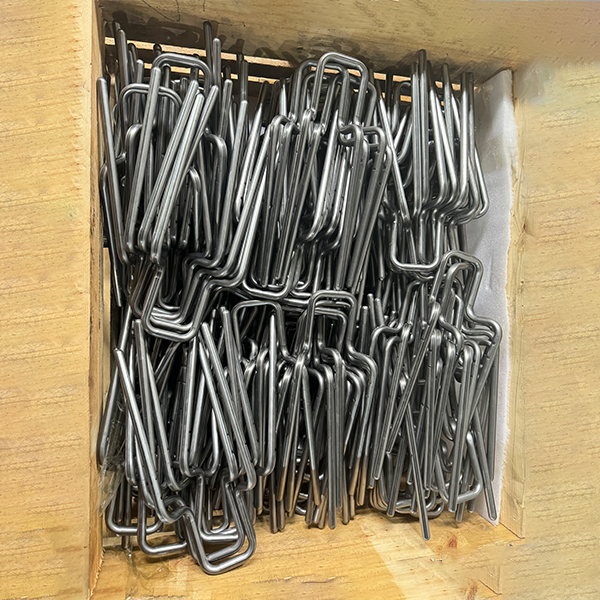
The machine can be applied to automotive components, motorcycle parts, hydraulic systems, furniture, sanitary products and other tube-processing industries.
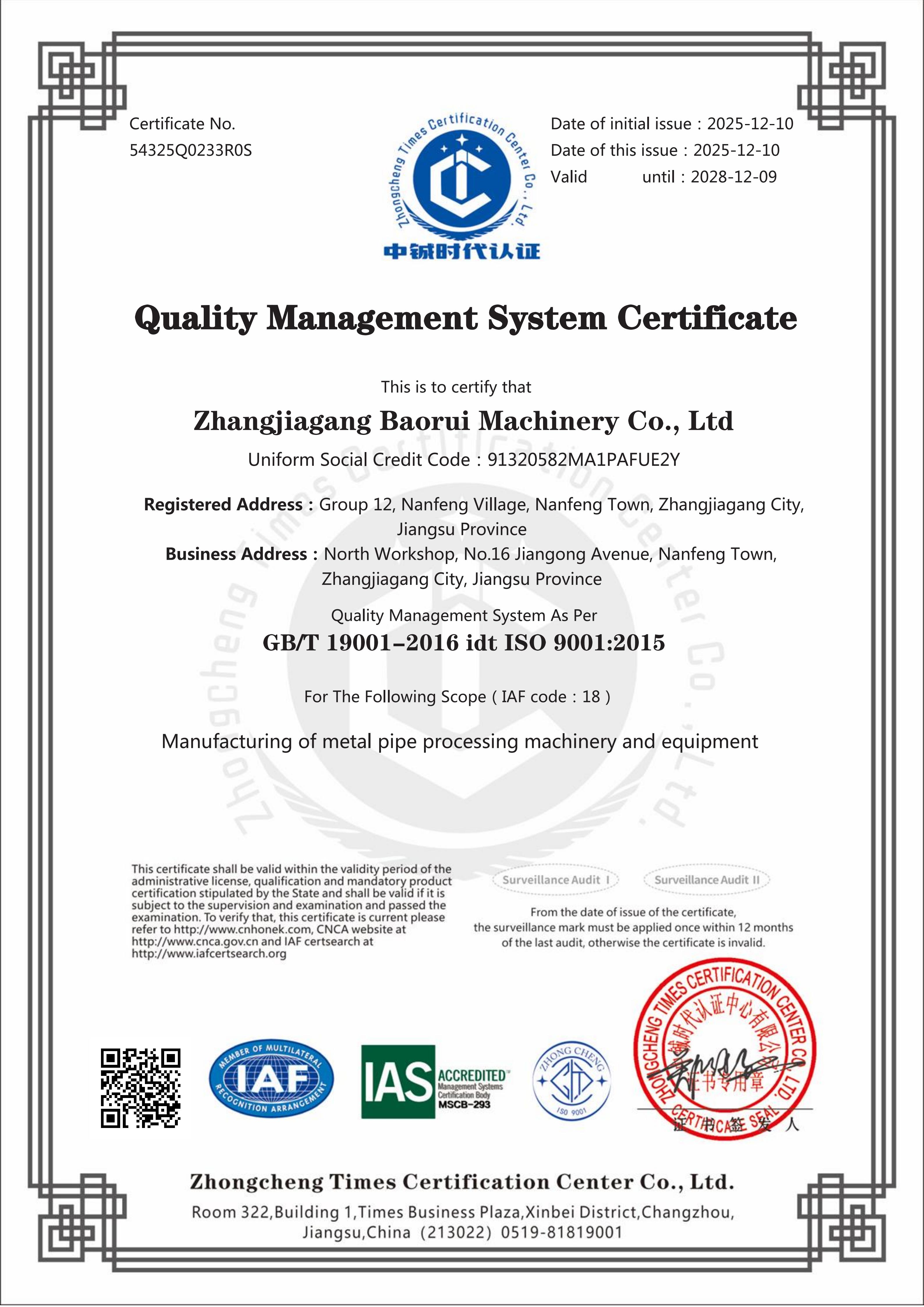
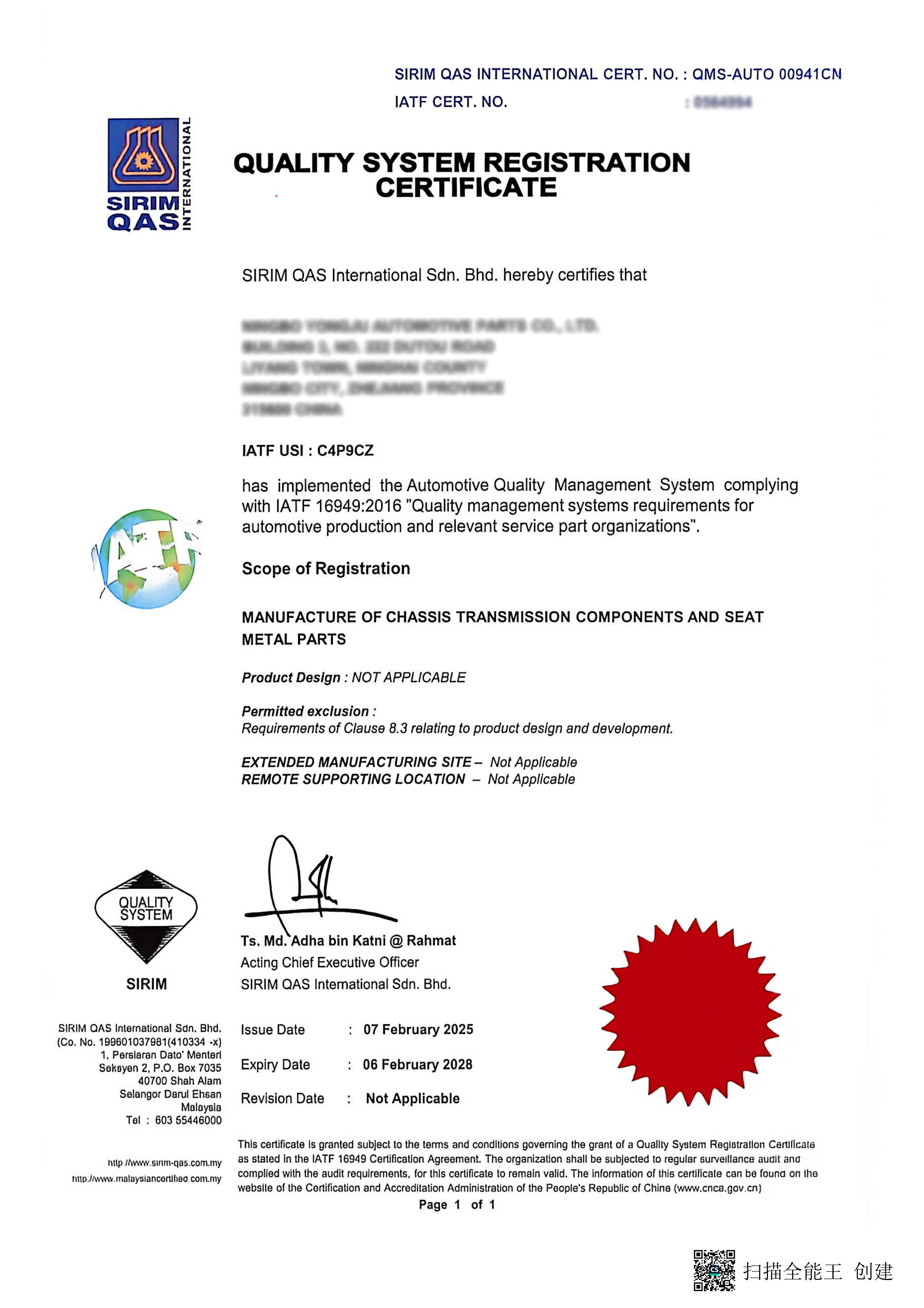
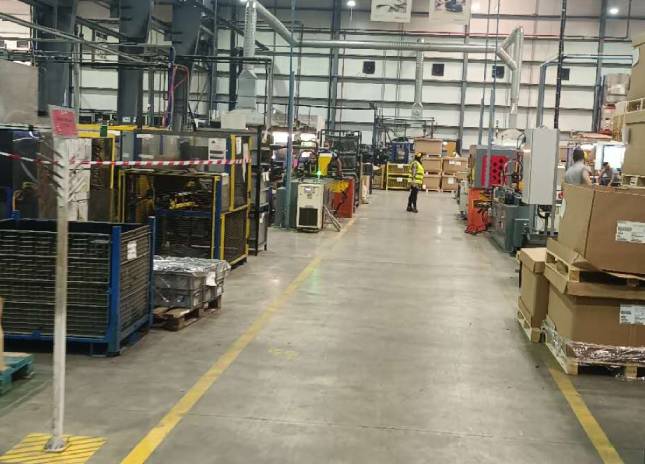
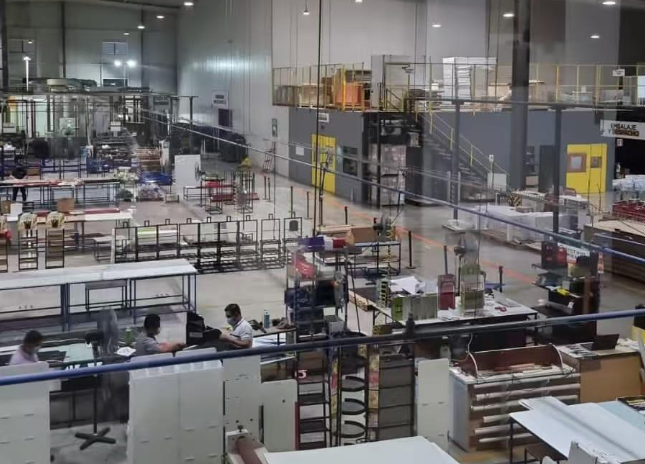
To overcome the efficiency bottlenecks and precision errors caused by multiple manual re-positioning in complex 3D headrest rod production for a leading Moroccan Tier-1 automotive supplier, Baorui Machinery deployed a 360° rotating head pipe bending solution; by leveraging one-shot spatial formation technology, we achieved a process breakthrough that boosted production efficiency by 40%, ensured full IATF 16949 compliance, and passed rigorous OEM audits while significantly reducing material waste.
| Item | Name | Unit | Data | Remark | |
| 1 | Max bending capacity | Carbon Steel | Φ18×1.6mm | ||
| SS Steel | Φ12×1.5mm | ||||
| 2 | Max bending radius | mm | 180 | ||
| 3 | Min bending radius | mm | Depend on the pipe diameter | ||
| 4 | Max feeding length | mm | 1800 | ||
| 5 | Max bending degree | Degree | 190 | ||
| 6 | Control Panel | IPC +touch screen | |||
| 7 | Bending unit | piece | 16 | ||
| 8 | Working speed | bending speed | Deg/sec | 120 | |
| Rotary speed | Deg/sec | 250 | |||
| Feeding speed | mm/sec | 800 | |||
| 9 | Accuracy | feeding | mm | ±0.1 | |
| rotary | Degree | ±0.1 | |||
| bending | Degree | ±0.1 | |||
| 10 | Rotary servo motor power | W | 400 | Japan Mitsubishi | |
| 11 | Feeding servo motor power | Kw | 1 | Japan Mitsubishi | |
| 12 | Bending servo motor power | Kw | 1.5 | ||
| 13 | Left and right movement | W | 750 | ||
| 14 | Machine head rotary | KW | 2 | ||
| 15 | Clamp tooling servo motor | W | 750 | ||
| 16 | Pressure die | W | 750 | ||
| 17 | Up and down movement | KW | 1.5 | ||
| 18 | The accuracy of roller | mm | 40 | ||
| 19 | Oil motor power | Kw | 3 | ||
| 20 | Program input | USB 3D Simulation | Adjustable | ||
| 22 | Oil tank | L | 110 | ||
| 23 | Machine weight | Kg | 1000 | ||
| 24 | Machine size | mm | 4060 ×780 × 1100 | ||
| 25 | Working height | mm | 3000 | ||
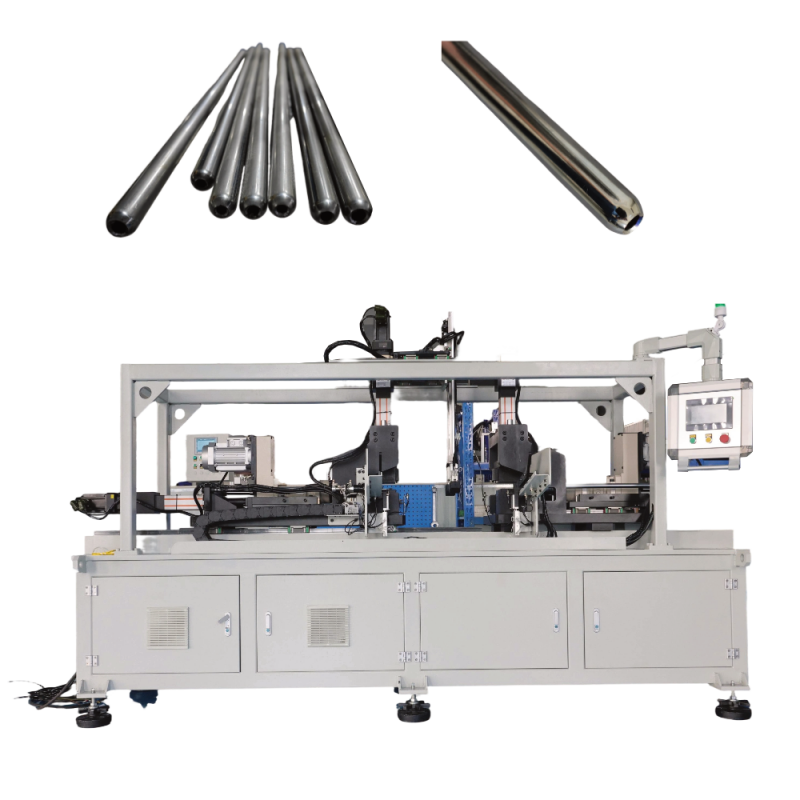
Zhangjiagang Baorui Machinery Co., Ltd. presents an advanced 360-degree rotating machine for headrest and anti-roll bar StabiliSer sway bar applications, engineered to meet the exacting demands of modern tube processing lines. This rotating machine delivers a comprehensive solution for headrest processing and anti-roll bar StabiliSer production through an innovative combination of precision rotation, automated handling, and robust construction. Designed by Bao Rui’s expert engineering team, the 360-degree rotating machine optimizes headrest processing workflows and streamlines anti-roll bar StabiliSer and sway bar automation for manufacturers seeking higher throughput, consistent quality, and reduced labor dependency.
At the center of this solution is the 360-degree rotating machine concept, which enables full circumferential access to parts during every stage of production. For headrest processing, the rotating machine offers seamless indexing and secure clamping that allow welders, cutters, and feeders to access the tube from any angle without repeated manual repositioning. For anti-roll bar StabiliSer and sway bar automation, the rotating machine integrates with precision feeders, bending units, and welding stations to ensure that each StabiliSer or sway bar receives identical operations on all sides. By consolidating multi-angle operations into a single rotating platform, the rotating machine reduces cycle times and eliminates many of the inefficiencies associated with traditional fixtures.
Bao Rui’s rotating machine focuses on adaptability. The rotating machine’s modular design supports quick changeovers between headrest processing and anti-roll bar StabiliSer production, and it can be adapted for sway bar automation tasks with minimal tooling adjustments. This flexibility is critical for manufacturers that alternate between small-batch runs and high-volume production. The rotating machine accommodates a range of diameters and material grades commonly used in headrest processing and anti-roll bar StabiliSer fabrication, enabling one machine to serve multiple product lines. In addition to mechanical adaptability, the rotating machine features configurable software profiles created using Bao Rui’s 3D software simulation system, allowing the engineering team to validate headrest processing sequences and anti-roll bar StabiliSer operations prior to deployment on the shop floor.
Precision and repeatability are distinguishing technical advantages of the rotating machine. For headrest processing, tolerances and cosmetic finishes are often critical; the rotating machine’s servo-driven rotation and closed-loop control guarantee consistent angular positioning for each operation. For anti-roll bar StabiliSer and sway bar automation, consistent bend angles and weld placement are essential for part performance and vehicle safety. The rotating machine’s accurate rotary control combines with position feedback and high-resolution encoders to maintain repeatable outcomes across thousands of cycles. This precision reduces rework and scrap, lowers inspection costs, and supports traceability in headrest processing and anti-roll bar StabiliSer production.
Automation integration is another area where Bao Rui’s rotating machine excels. The rotating machine is engineered to function as part of a fully automated line, communicating with upstream tube feeders and downstream assembly systems. In headrest processing, the rotating machine synchronizes with automatic feeders and robotic welders to produce consistent parts without human intervention. For anti-roll bar StabiliSer and sway bar automation, the rotating machine can coordinate with CNC bending machines, laser cutters, and robotic inspection stations to form, cut, weld, and verify components in a continuous flow. This high level of automation reduces variation, cuts labor costs, and increases throughput for manufacturers targeting tight delivery schedules.
Safety and operator ergonomics are built into the rotating machine design as well. Bao Rui equips the rotating machine with guarded enclosures, safety interlocks, and convenient access points for setup and maintenance. For headrest processing, operators benefit from simplified part loading and easy tooling access, minimizing physical strain and speeding up setup. For anti-roll bar StabiliSer and sway bar automation systems, the rotating machine’s safety features enable higher operating speeds and more aggressive cycle profiles without compromising worker well-being. The rotating machine’s control system also includes diagnostic tools and remote monitoring options, allowing maintenance teams to anticipate issues and reduce unplanned downtime.
Durability and low life-cycle cost were prioritized in the rotating machine’s construction. Bao Rui selects high-strength materials and heavy-duty bearings to sustain the torque and continuous rotation inherent in headrest processing and anti-roll bar StabiliSer production. The rotating machine’s maintenance points are accessible, and common wear parts are standardized to simplify spare parts management across multiple lines. These design choices translate to longer mean time between failures and more predictable maintenance schedules, both of which are important for operations that run headrest processing and sway bar automation around the clock.
Customization and engineering support are core services Bao Rui provides alongside the rotating machine. The company’s design team leverages 3D simulation to model headrest processing cycles and anti-roll bar StabiliSer workflows, optimizing fixturing, cycle times, and safety before physical prototypes are built. Customers receive tailored rotating machine configurations that align with specific tube sizes, bend radii, weld types, and production targets. Bao Rui also offers training and commissioning services to ensure that the rotating machine integrates smoothly into existing production environments, minimizing ramp-up time for headrest processing and sway bar automation projects.
Energy efficiency and environmental considerations were incorporated into the rotating machine’s development. Servo-driven motors and optimized motion profiles reduce energy consumption compared to older pneumatic or hydraulic systems typically used in headrest processing and anti-roll bar StabiliSer lines. The rotating machine’s precise control minimizes material waste, lowering the environmental footprint of sway bar automation and related manufacturing tasks. Together these features help manufacturers improve sustainability metrics while maintaining high production volumes.
In summary, Bao Rui’s 360-degree rotating machine for headrest and anti-roll bar StabiliSer sway bar applications brings a compelling blend of precision, flexibility, and automation readiness. By enabling full circumferential access and synchronous operations, the rotating machine streamlines headrest processing and supports advanced anti-roll bar StabiliSer manufacturing and sway bar automation. With robust construction, high-accuracy control, modular tooling, and integration-ready software created through Bao Rui’s 3D simulation expertise, this rotating machine helps manufacturers achieve consistent part quality, faster cycle times, and lower total cost of ownership.
 EN