 EN
EN

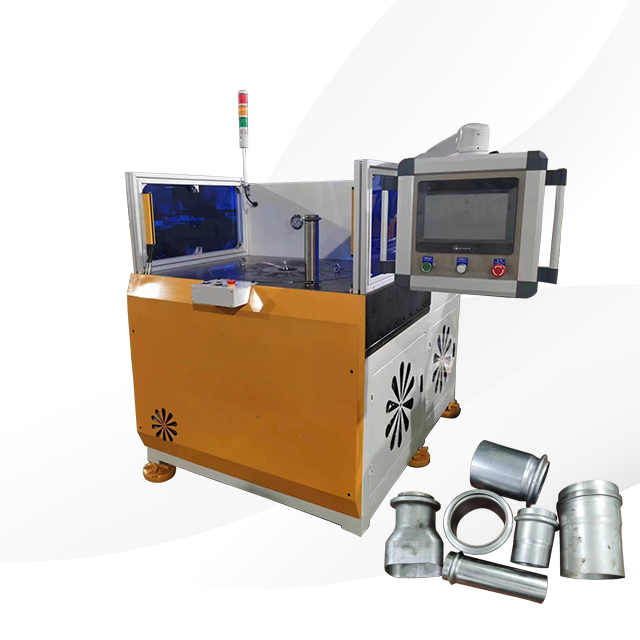
Exhaust pipebending presents a peculiar challenge: Instead of being the typical round tubing typically used in mechanical engineering, exhaust tubing is made of thinner gauge materials due to weight and heat considerations, but the thin walls are far more prone to collapse, ridges and wrinkles which reduce flow and produce points of stress concentration. Although wrinkles look unpleasant, they critically compromise pipe strength and cause premature fatigue failure. Fortunately, the problems are always easily preventable with the correct approach. These are the three simple secrets to bending a flawless exhaust pipe without wrinkles.
Secret One: Control the Mandrel and Wiper Die Setup
The most frequent cause of wrinkles in thin-wall exhaust pipes stems from lack of internal support during the bend. The internal wall cannot maintain compression without support, and it begins to "gather" or wrinkle.The secrets to correct thin-wall setup lie with using a precise-ground multi-ball mandrel set to the correct bend radius and with balls closely spaced so they continuously support the inner wall as it goes through the bend arc. A multi-ball mandrel is crucial for thin-wall tubing and the balls extend beyond the tangent. A properly aligned wiper die is necessary to keep the outer wall from folding in on itself at the onset of the bend; the wiper die must contact the tube without gap and be made of low-friction material to prevent scratches on the delicate surfaces. Misaligned or improperly sized wiper dies are very often a problem and cause the first few degrees of the bend to have poor or no support. Ensure that the mandrel nose rests perfectly at the tangent and that the wiper die fits snugly against the pipe without any gaps. These two components working in unison support the tubing and redistribute the stresses of the bend.
Secret Two: Fine-Tune Pressure and Feed Rates for Thin Walls
Thin wall tubing responds differently than thick wall. Clamping pressure is critical for proper thin wall bending and boost speed is essential. For the former, too much pressure will collapse the tube; too little will allow the tube to slip while rotating in the dies, bunching up and folding. Find the lowest pressure at which the tube does not slip while bending and use that. In terms of the latter, boost speed allows you to "push" material through the bend radius to compensate for the outward pull that stretches the outer wall and compresses the inner wall, causing wrinkles. For thin-wall tubing, this has to be timed perfectly-too little boost allows excessive wall thinning and stretching, while too much forces a heap of material at the leading edge of the bend. Optimal boost speed roughly correlates with the linear speed of the bender head. Start with a lower boost percentage and incrementally increase while observing the inner radius: the best setting will produce a smooth inner surface without any visible ripples. Log this speed for every specific size and wall gauge pipe you bend.
Secret Three: Use Proper Lubrication and Mandrel Extraction Timing
This third secret is probably the most commonly overlooked: the quality and timely extraction of the mandrel. Friction between the mandrel balls and the internal surface is exacerbated in thin wall bending, and poor lubrication allows the friction forces to pull on the inner wall, creating wrinkles localized at those point of greatest friction. Use a high-viscosity, bend-specific lubricant that maintains its film strength. Don't skimp on it or substitute less robust options for cutting or machining. You must thoroughly lubricate both the mandrel and the inner surface of the tubing. Equally as important is when you extract the mandrel. As soon as the bending action ceases, and BEFORE the die has fully released the pipe, pull the mandrel back. If the mandrel is not removed promptly, the dies may scratch or damage the inner wall producing fine internal folds that are generally not visible. Program the bender to unclamping the die first and then create a short delay before the mandrel retracts. This gives the tubing a brief chance to recover its shape before the mandrel is pulled. In complex exhaust systems where there is more than one bend, it is helpful to program intermediate mandrel returns so that wear on the balls is evenly distributed and does not build up to damage a bend.
Putting the Three Secrets into Practice
Successful thin-wall exhaust pipe bending relies on the consistent execution of these three secrets. Install a multi-ball mandrel and precisely fitted wiper die in your bender. Run test bends and use your hydraulic CNC pipe bender to dial in precise clamping and boost settings specific for thin-walled tubing. Maintain a disciplined schedule of mandrel and pipe lubrication. Time your mandrel extraction properly-it has to happen after you have fully opened your die. When combined and applied to your process on a daily basis, wrinkling will become an anomaly rather than a production headache. Using a machine designed with these factors in mind, like many built by Baorui for instance, which are CNC hydraulic benders with decades of tube processing experience can take the guess work out of these details. Controlling internal tooling, machine operation, and lubricant are key. If your thin wall tubing becomes wrinkled during bending, you can solve it if you properly manage the three secrets to smooth bending and have the right internal tooling.