 EN
EN

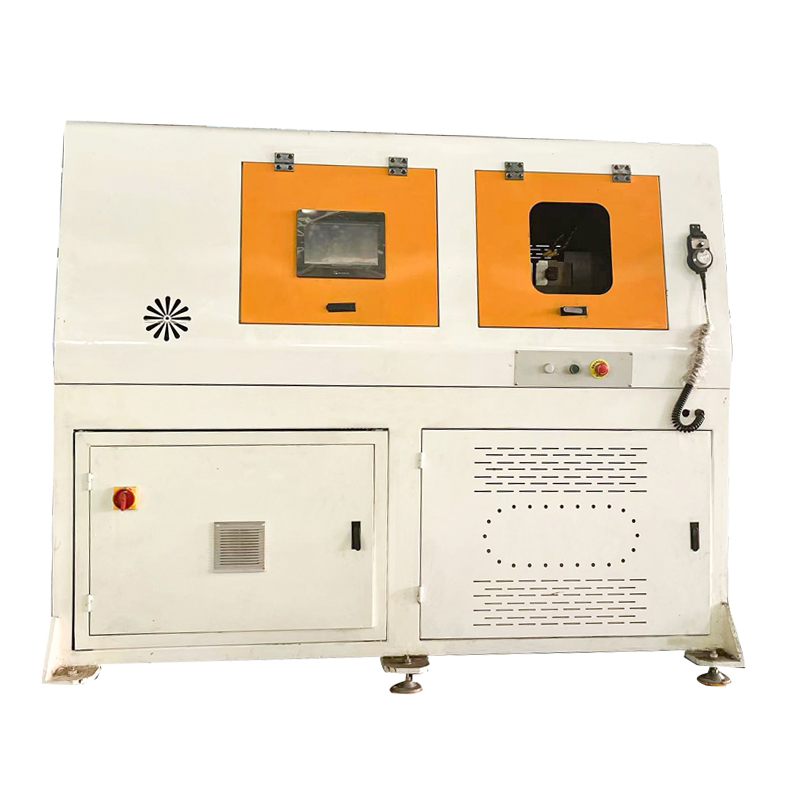
You will only be able to evaluate true capability by visiting a manufacturer. But walking through the factory without a specific testing procedure is a waste of everyone's time. The following is a set of repeatable tests designed to distinguish between genuine manufacturers, and suppliers that simply assemble catalog parts. After 20 years of manufacturing CNC hydraulic pipe bending machines, and tubing and pipe processing equipment, we welcome visits and tests. Here are some tests we found to be the most revealing of genuine manufacturing depth.
Run a Repeatability Loop with Measurement
Ask the manufacturer to demonstrate bending a part fifty times consecutively. Choose a part that involves at least two different bend angles. Take a measurement after every five bends using a digital protractor. The manufacturer should be able to demonstrate a repeatability within tight limits for all fifty parts. For an automotive or medical application, a total variation less than 0.2 degrees is typically a good number. Observe how the test is performed. Are the operators taking care and preparing the part? Serious manufacturers are accustomed to performing tests such as these and will have the tools readily available. Their hesitance may be a clear warning.
Push the Machine to Its Rated Capacity
Most benders come with specification sheets stating the maximum bending capacity of the machine. Ask the manufacturer to perform a bend at 90% of stated capacity on the largest wall thickness, and tightest bend radius, that the machine can be stated to handle. Listen for indications that the pump is strained, the clamp is slipping, or the frame is being compressed. Observe the bend part for any signs of wall thinning or ovalization, or wrinkling, that indicate failure.
Inspect Hydraulic Component Access
Open the electrical panel and the hydraulic power unit. Are the wires clearly labeled and neatly routed? Are the hydraulic lines secured properly so as not to rub against any moving parts? What brand of pump and valves is used? Does the manufacturer hide the part labels, or clearly list well-known suppliers? How easy is it to access the pump and filter for routine maintenance? A well-built machine will be designed with maintenance in mind.
Observe a Tooling Changeover
The amount of time required for a tooling changeover can significantly impact the total production time required. Ask the operator to demonstrate a changeover from one tube diameter and die size to the next. Measure the time taken from when the last good part of the first tube is bent until the first good part of the second tube is bent. Typically, a changeover on a well-designed CNC hydraulic bender should take under fifteen minutes for standard tube sizes. Observe if any special tools are needed for the changeover. Are dies registered accurately by mechanical keys or do they require trial and error positioning?
Review Their Quality Control Documentation
Look at the quality documentation for the specific machine being reviewed. Good manufacturers will have build sheets document torque values, pressure test results, and run time testing records. Look for dates and signatures where work was signed off. Also ask if they inspect incoming components or rely on the supplier to verify component quality. What kind of records do they keep if a component fails incoming inspection?
Examine Weld Quality on Frames and Tooling
Walk around the frame and tooling areas, and observe the quality of welds. Do they appear clean, uniform, and well integrated? Are the welds undercut, porous, or inconsistent? Is any grinding used, especially around the operator interface, to remove burrs and ensure safety?
Why These Tests Work
Repeatability testing indicates the precision of the hydraulic control and repeatability of the bender. The capacity test shows whether the specifications are truthful. Hydraulic and electric access reveals the design and thought used in manufacturing. The changeover test is indicative of the quality of the tooling design and engineering. Quality documentation shows how the manufacturer tracks its own processes. Weld quality is indicative of skilled labor, attention to detail, and a willingness to properly fabricate its equipment. Customers like yours have used these exact tests to select a machine, and we pass them.