 EN
EN

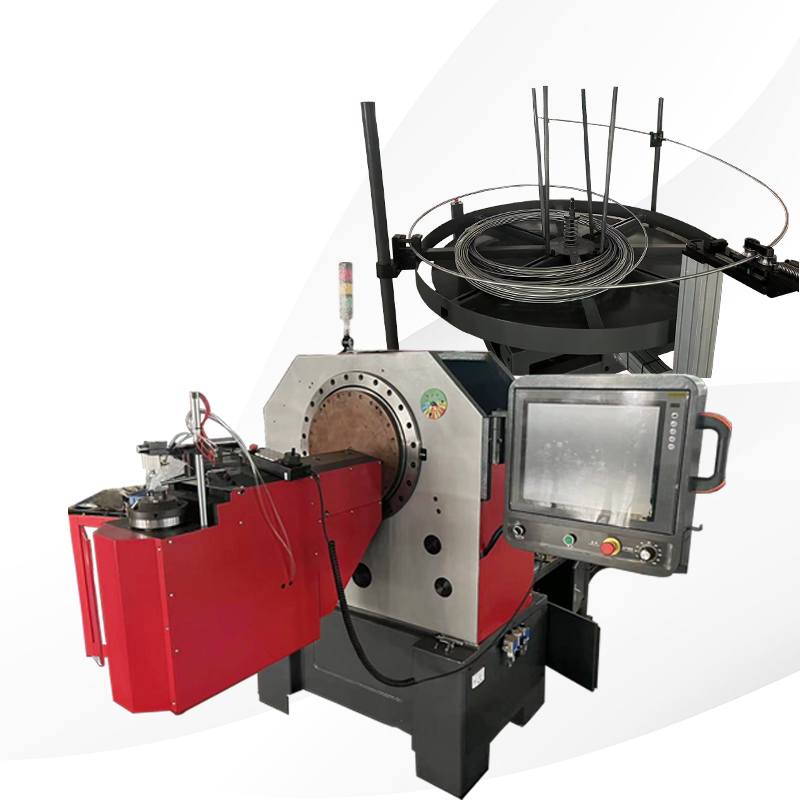
Precision in wire bending is not something that is ever set and forgotten. A machine that makes perfect parts on Monday could have wandered off its intended path by Tuesday morning. Temperature changes, tooling wear, fluctuations in hydraulic pressure, and variations in material stock, can all take their toll. Any wire bending machine manufacturer that wants you to buy its product knowing it will be accurate for years does not start by making the new machine perfectly accurate. They start by building machines that remain perfectly accurate for thousands of production hours and millions of bends. Here at Baorui, after two decades of making pipe and profile bending machines, we have come to understand what needs to be built into a wire bending machine so that it remains perfectly accurate throughout its operational life.
Why Wire Bending Machines Lose Precision Over Time
Mechanical wear is the most obvious enemy of long-term accuracy in wire bending. The guiding rollers will develop flat spots. The bending pin will wear to slightly less than the full desired diameter. The clamping dies become polished by the wire passing through, and the accuracy is lost. Second on the list of enemies is hydraulic drift. As a pump wears, its performance will change. The solenoids in a valve can develop slight sluggishness as they age, altering response time. A cylinder seal can age and harden, and create its own variations in friction. The third enemy of long-term accuracy in a wire bending machine is control system deterioration. Errors in an encoder will accumulate over time. Dead bands will develop in the control loop. Vibration can actually loosen electrical connections in a control cabinet. Most machines have a problem and a customer does not realize it for six months. After that, the machine is often more of a burden than a productive tool. A good wire bending machine manufacturer engineers for each of these enemies before the machine even leaves the factory.
How Tooling Design Extends Precision Life
The most common and cheapest way for a manufacturer to produce a cheap wire bending machine is by cutting corners on tooling design. It is very easy for an inexpensive bending die or pin made from low carbon steel to wear out. It is very easy for a poor bending die design to concentrate all of the bending force on a single tiny spot and wear the tooling out quickly. A well-designed bending die or pin from a quality manufacturer, however, will be case hardened and designed for reversible use if it has any flat sides. The design will be of an appropriate size so that its load-bearing capacity will not be quickly exceeded. It will also have generously radiused corner so that a sharp edge is not the primary point of contact. Some very high-quality manufacturers will actually use carbide inserts for very heavy duty wear surfaces. These do not add to the price of the machine in any way that you as the customer will be able to identify up front. The thing that will be most evident about a machine built with these kinds of design principles is that it just keeps producing accurate parts for a long time.
The Role of Structural Rigidity in Consistent Bending
Even a wire bending machine has quite significant forces exerted on it. While an inexpensive steel part does not seem to have very much strength when bending, if a tight bend is performed on it, a surprisingly high amount of pressure is exerted. A wire bending machine that flexes while making its bend will produce an angle that is different from when the machine is solid. An important part of making a good wire bending machine is to prevent deflection of the machine frame. Most of these machines are made with welded plates and they have structural ribs, gussets, and other stiffeners placed in logical places. Good design here is really just about thinking through where stresses are likely to occur and putting in the materials that are necessary to prevent deformation. If a wire bending machine is not built correctly with strong enough materials or the proper structure then even small temperature changes will create small deflections. These tiny changes in the relative angle between the tooling and the part, when applied during the bend cycle, result in bends that are not precisely the same as the last one produced.
How Calibration Habits Separate Trusted Manufacturers from Others
Even the perfect machine in the world would be nothing if it is not calibrated correctly or consistently. Most good wire bending machines include positive physical stops, well-designed loading chutes, and quick change systems so that an operator cannot accidentally misplace a die. This ensures accurate repeatability of position. This is the mark of a good wire bending machine manufacturer. The design of the calibration features should be simple to access and simple to execute. They should also not be dependent on having outside calibration devices or complicated spreadsheets for their calibration functions. They should allow for the fact that most users are going to want to calibrate their machines more than once a day — preferably at the start of each shift.
How Baorui Maintains Precision Across Decades of Use
We at Baorui design our pipe, tube, and wire bending machines by a simple rule: any part that contacts the workpiece must be replaceable without full recalibration, and all supporting structures must withstand stresses without deforming. And all of the control parameters and sensors have to have some mechanism for flagging if something is beginning to go wrong with the bend. All of these simple rules that seem so obvious after years of experience and after twenty years of being in business are what give you a reliable piece of equipment.