 EN
EN

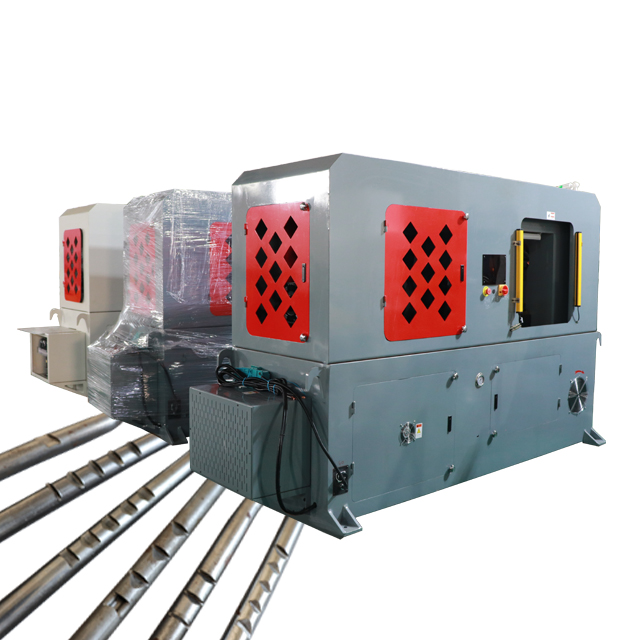
The surface finish quality is as crucial as dimensional accuracy in areas like medical equipment, kitchenware and automotive parts. While a bent stainless steel pipe may still be functional despite scratches, the appearance can be considered unprofessional and a trap for dirt. Marks on tubing during bending are not unavoidable; the quality of your tooling separates mirrors -like parts from those with unsightly scratches. In its 20-year manufacturing experience, the maker of CNC hydraulic benders, pipe cutters and chamfering machines, Baorui, has discovered exactly what impacts on the surface finish. The mechanisms for scratch and preventive measure taken by using premium tooling are discussed below.
Why Stainless Steel Is Easily Scratched During Bending
As a component in medical equipment or kitchen hardware, the chromium-enriched surface of stainless steel provides excellent corrosion resistance. On the other hand, this protective layer makes stainless steel pipes very sensitive to abrasion. During bending, the tubing constantly slides along the bending die, clamp die, the pressure die, and wiper die. Any defects on these tooling surfaces will be transferred to the tubing. Moreover, stainless steel is subjected to work-hardening as it gets bent, which leads to a higher contact pressure. In contrast to mild steel and aluminum, the scratched surface marks are easily seen and difficult to get rid of without vigorous polishing. Hence it is much more practical to prevent scratches from happening by using quality tooling than removing them by post-operation polishing.
The Role of Surface Finish on Bending Tooling
A poorly machined die that is not smoothly polished may not do any good to your tubes as any rough machining marks, grinding traces or inconsistently polished surfaces on it can file the tube surface. The smallest peaks on the die surface, when the tube slides against it under the bending stress, can leave significant scratch marks on the tubing. The high quality bending dies will undergo sequential processing steps: precise CNC machining is performed first, and then they are polished by hand to eliminate the machining traces; finally, the die surfaces are super finished to under 0.2 microns Ra, so it can feel like glass in human hand and the tubes could smoothly slide without any friction between them. The serious manufacturer must use profilometers to measure the surface finish of dies and any dies that exceed specified standards would be rejected.
Hardness and Material Selection for Long-Term Scratch Prevention
Because the die has to work continuously through countless bends, it should have sufficient durability against abrasion. With the die getting worn, its smooth surface will be damaged, becoming indented, grooved, or raised edged and hence scoring the tubing. Quality tooling is usually made of tool steels such as D2, A2 or M2, and it is heat-treated to the hardness of 58-62 HRC. Some ultra-tough dies for extremely strict stainless steel pipe bending application may be even additionally treated with chromium nitride or titanium aluminum nitride coating. With such a surface finish, the hardness can exceed 70 HRC and the coefficient of friction would be reduced. It also prevents the galling, which often occurs when stainless steel particles adhere to the die surface and act like abrasive elements to scratch the tube surface. Poor quality tooling manufactured from mild steel and inadequately heat treated alloy will start scratching the stainless steel pipe on the very first bend.
Wiper Dies and Scratches on the Bend Inner Radius
The wiper die, which is designed to prevent wrinkling on the inner radius of the bent pipe, comes into direct contact with the tube. Its defective performance and incorrect shape design can be a frequent cause of scratches on the tubing. Well-designed wiper dies are precisely shaped according to the required bend radius and its leading edge is beveled so that it engages with the tube gradually without damaging its surface. Its contact surface should be highly polished and properly lubricated, for example by the bending wax or oil provided by leading tooling suppliers. As an additional improvement to avoid metal-to-metal contact for certain critical stainless steel pipes bending, a bronze-filled insert or a polymer tip for the wiper die could be manufactured and utilized, so as to support the pipe without scoring the surface. Regular replacement of the wiper die based on accumulated cycles is critical for scratch prevention.
Clamp Die and Pressure Die Contact Marks
The clamp die secures the tubing in place during the bend, whereas the pressure die advances the tube into the die. Both components exert a high normal pressure on the tubing surface. Any imperfection on the dies can thus be transferred as linear scratches along the tube axis. The key aspect for preventing scratches arising from clamp and pressure dies is the intelligent application of relief grinding. This modification effectively reduces the actual contact area with the tubing to only where the normal force is indispensable for clamping or pushing the pipe. Dies with full contact can be prone to higher frictional contact. In addition, adding urethane or rubber padding to these parts allows them to grip the tubing without damaging the outer surface. Ensuring that the clamp die is aligned precisely with the bending die also minimizes the edge contact, which concentrates the pressing force onto very small regions, thus inducing scratches.
Conclusion
The surface finish of your bent stainless steel tubes is largely dependent on the quality of your tooling. High quality dies for Baorui CNC hydraulic pipe benders feature precision-machined, expertly polished, wear-resistant surfaces that prevent scratches. They deliver the high quality products that medical, automotive, and kitchenware markets demand. High quality tooling is not just an expenditure; it's the difference between parts that wow customers and parts that don't.