 EN
EN

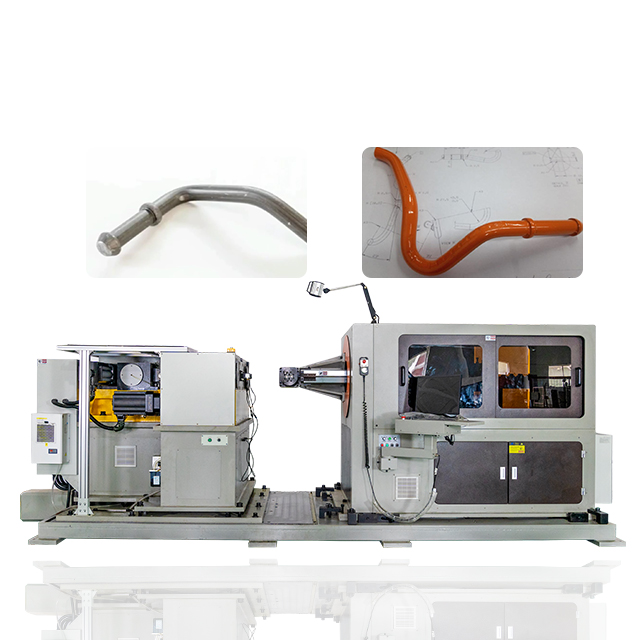
There is a paradox when dealing with large radius bends in metal fabrication. They are less dire than tight, deadly corners, but they can be more tricky to accurately perform without errors. The biggest obstacle in this is wrinkling on the inside radius. If the bend radius is greater than five times the tube's diameter, the flow of material is uncertain, with the compression zone increasing in size. It's been 20 years that we've been working on this particular problem at Baorui. After years of hours on the production floor we've extracted three engineering tips that we've used to work out wrinkling free, perfect large radius curves.
Manage the Material Flow with Precision Booster Control
Excessive force is the wrong reason for wrinkling in large radius bends, the main reason is due to insufficient feeding of the material. If you take the material and bend it tightly, it extends more than it is compressed. In a large radius bend the reverse applies: the compressive stress is applied over a longer arc on the inside of the tube but the volume of material that has to be moved is considerably larger. Compression zone is starved if the machine does not actively push the tube forward into the bend die, and thus buckling occurs in the material.
The secret is in syncing the boosters. There are a lot of operators that use a set feed rate, however, that is not the case for long bent radii. The booster should have a carefully-determined acceleration set according to the bend angle. It has been found that for all of our engineering designs, the booster force needs to be dynamically changed in real-time depending on the changing area of the tube. The inner wall folds even after the booster delays just a few milliseconds. This is done by closed loop hydraulic control of the actual material flow, not the carriage position. If there were any wrinkles, they are eliminated by proactively absorbing and feeding the compression zone.
Optimize the Mandrel Placement and Configuration
Many fabricators think the standard plug mandrel will do for large radius. This is a crucial mistake. The length of the unsupported span (that is, inside the tube) must be quite long for the mandrel because of the large radius. The superior design of a spherical mandrel can end up being inadequate in providing the internal support needed when balls articulate over the slight curvature. If the mandrel is positioned too far back, then the material falls into the gap and deposits there. If it's positioned too far forward, it will damage the inside of the wall and prevent it from flowing. If placed too close to the front the wrinkle will be worse and it will scar the inside of the wall.
The trick of the engineering is to change to a multi-ball mandrel that has a particular radius and a particular articulation angle. For big radii, mandrel balls with a shallower pivot angle than the regular tooling are being employed. This not only enables the mandrel to trace the curve properly, but also to avoid pressure points and gaps. In addition, the ball that lands is supposed to be set up in the forward position and be approximately 10-15% more forward than if it was set up for a tight radius. This positioning provides the needed mechanical stress in the critical zone of deformation in which the compression wave occurs. The appropriate mandrel setup not only helps eliminate buckling but is also designed to ensure that the material flows into a desired pattern that is controlled.
Apply a Tailored Wiper Die Clearance Strategy
Many people consider the wiper die a non-obvious element of the bending operation, but the wiper die in large radius bends is the last line of defense against wrinkling. Where the problem lies is that the wiper will need to be in line with the bend's outside edge, but the material on the inner radius will go at a different speed than the material on the outer radius. When the wiper clearance is set according to standard specifications, it will either cause the material being pressed to be squeezed or not be tight enough to meet the requirements for flatness contact with the mandrel.
The key is to follow a clearance strategy with the variable. We no longer use a standard clearance between the wiper and the die, but we have a progressive taper machined into the wiper face. This taper will provide maximum pressure at the beginning of the bend then a decrease in pressure as the tube leaves the bend. This is equivalent to natural strain distribution of material. Also we modify the extension of wiper die after the tangent point with a carefully-controlled amount of half tube diameter. This particular overhang forms a support bridge which stops the wrinkles from starting at the beginning of the bend. With the use of a high viscosity oil which remains stationary under the low bend speed associated with large radii, this wiper approach is an effective tool for flattening any waves that are present prior to becoming a permanent defect of the print job.
A combination of active booster synchro, advanced mandrel geometry and precision wiper tuning makes large radius bending the routine operation it should be. At Baorui, these three principles are not just going to be "adjustments," they are on-camera engineering standards built into our CNC hydraulic pipe bending machines. We can manage material flow, compaction internally and the path of the metals out externally, which results in just correct, wrinkle-destroying bends, every single time – no matter how tiny or tight. This method removes the guesswork and guarantees that every arc with large radius is produced of the highest quality for application on the automotive and medical industries, and furniture manufacture.