 EN
EN

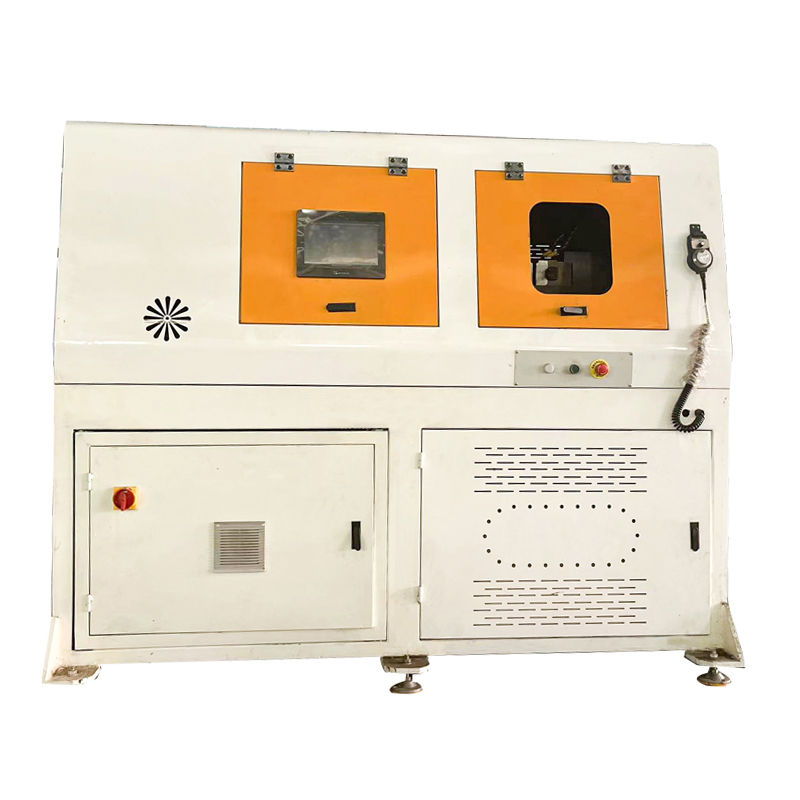
For a multitude of automotive parts, medical equipment, kitchen hardware and furniture components the need arises for Stainless Steel tube bending. Operators struggle with two ongoing issues: surface finish (scratches) and internal wrinkling. Using the wrong bender typically results in scrapped parts, rework, and frustrated operators. This article aims to offer practical advice for selecting an SS tube bender that avoids these problems.
Start with Machine Rigidity and Frame Construction
Flexibility in a machine frame causes tooling to go out of alignment, which results in points of concentrated pressure causing wrinkles. Investigate how the frame is constructed. Heavy gage steel and welded reinforced C-frames are generally less prone to deformation, and the best machine frames are machined from solid plate. You should also determine the rated maximum bending capacity of the machine in relationship to the diameter and wall thickness of tube being bent. The higher the load compared to the bender’s rated capacity the more likely that the tooling will develop wrinkles and score the tubing surface. For stainless tubing, a bender should have at least 30% capacity over the highest rated wall thickness required to be bent.
Look for Precision Mandrel Systems
The mandrel is really the key component to prevent wrinkling on thin wall SS tubing. A well-designed system is straightforward and consists of three integral parts. The system should include a ball mandrel that is articulated so that it follows the contour of the bend. This requires segments with a round curvature that interlock smoothly. When bending, the mandrel should automatically retract fully to ensure that it does not score or leave marks inside the tube. The mandrels should also be positioned correctly at the bend tangent, meaning the first ball of the mandrel should start at the point at which the bend begins. When considering machines that you have access to test or buy ask whether the mandrel has programmable positioning in increments of 0.1mm or less. Fine control like that is essential for SS and smooth clean results.
Examine Tooling Surface Finish Specifications
Before purchasing a bender, you should be provided with specifications on tool surface finish. Standard values for any contact surface on the bending die, clamp die, pressure die and wiper die should have 0.2 micron Ra or better on all surfaces. Ask to see and touch the tools on a bender. Test bend SS tube with it and examine the sample pieces under a light for visible scratches or galling. The tool material should also be considered and should preferably be tool steel such as D2 or A2 heat treated to a Rockwell scale of 58 to 62. Uncoated low carbon steel tools will easily score the tubing and are best avoided when bending stainless.
Verify Closed-Loop Bend Angle Control
Inconsistent bend angles force over and under bending the part, both of which will disrupt the normal flow of material and contribute to surface marks or wrinkles. A good system uses rotary encoders or laser sensors to monitor the bend angle in real time and feedback to the servo motor or hydraulic system to accurately and repeatably bring the bend to the required angle. These systems will also adjust automatically to compensate for the springback of the material; that means that your first part and one-hundredth will be the same angle without adjustment. You will want to ask how this is done for your particular sizes and wall thicknesses and if the settings can be stored.
Check Wiper Die Adjustment and Lubrication Systems
The wiper die controls the internal wrinkling on the inner radius, but it is also a contact point on the outer surface of the tubing. Easy adjustment of the wiper without removing any tooling is paramount and this is generally achieved with micrometer adjustments. It is also important to ask about the size range a bender's toolkit is capable of is important as well and adjustment must always be possible across that range, without moving dies. If the adjustments are difficult, operators simply will not do them correctly. Lubrication is also very important to control galling on the tubing surface. Automated lube systems (drip or mist) are preferable to manual application and should feature programmable cycles linked to bend count.
Test the Machine with Your Actual Tubes
When choosing a machine for SS tubing, you really cannot do enough tests with the specific type of SS and diameter of tubing you have. Test bend some thin wall 304 or 316 with a tight 1.5D bend. Watch for wrinkles and listen for any scoring noises. It’s good practice to get some supplier samples saved with bend settings applied to them. If the first attempt results in acceptable parts with the required lube you are generally set for most applications.
Conclusion
The most crucial elements when buying a bender for stainless steel tubing, for automotive, medical, and kitchen hardware — are: a well-constructed, ridged machine; an accurate mandrel system; well-machined tooling with a superior surface finish; closed loop bend angle control; easy wiper adjustment; and an automatic lubrication system. At Baorui, we have developed high quality CNC hydraulic pipe benders that include all of these features for our clients. We believe these features should not be optional.