 EN
EN

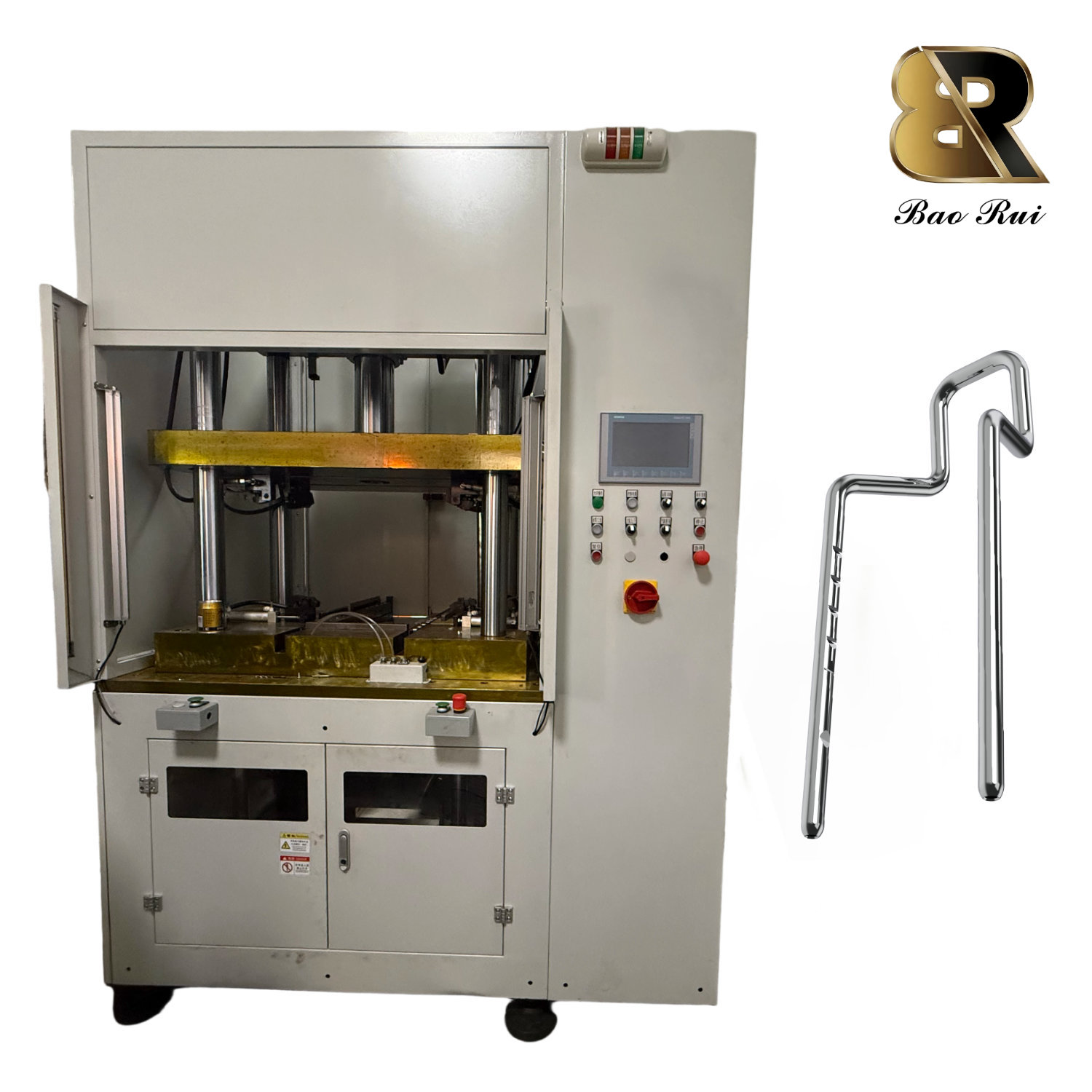
Many production lines (in the automotive parts industry, the medical device industry and the furniture industry are the major ones) work using hydraulic pipe benders. A breakdown of a hydraulic bender will represent more than a simple repair job. Production has to be suspended and a failure to meet delivery deadlines is common, coupled with waste of materials. The serious manufacturer however, does not wait for failure. They implement a series of practical, on-going tests that ensure that the hydraulic benders keep running day in and day out. Having spent two decades in pipe and profile processing, Baorui knows which tests separate the workhorse bending cells from the perpetually breakdown-prone models.
Hydraulic System Pressure and Leakage Tests
The first source of a bent failure is the least visible. Subtle changes in hydraulic pressure and leaks can easily be missed until the bent is already out of specification. Responsible manufacturers of hydraulic benders will put them through repeated pressure holding tests during a work cycle and watch to see if they retain the desired pressure within the specified small margin. They look for leaks in hoses, fittings, and cylinder seals — and, just as critically, internal leaks (bypass) through hydraulic valves and cylinders. A simple cylinder drift test—will tell a manufacturer that the internal piston seals are starting to wear, even before a catastrophic seal blowout or significant fluid loss during the bend.
Frame and Tooling Alignment Under Load
A frame can look perfect under power but shift dramatically under bending load. Those that avoid failure are regularly verifying alignment of the bending die, clamp die and pressure die to each other at maximum operating pressures. Imprecise alignment will cause tube ovality, score markings, tool wear, etc. These tests are simple but definitive: bend a pipe, measure ovality and wall thickness throughout the bend to ensure a uniform value in all sectors. An unbalanced result indicates a failure of proper load alignment. Serious manufacturers check the bending frame for flexing under maximum tonnage conditions — even on newer, heavy duty machines. Years of over-bending or high production volume will create stress that affects alignment.
Cycle Time Consistency and Motion Smoothness
Catastrophic failure is rarely sudden. Some of the most reliable indicators of problems on a hydraulic pipe bender include changes in cycle time and jerky motion. Reliable manufacturers not only keep track of bent output cycle times for production purposes, but they also check it for deviations from what's normal as a means of preventing failure. The sluggishness points towards an aging pump, worn valve spool, or a cylinder seal that may stick either leading up to, or during, a failure. The feel of the bending motion is also important: The motion should be proportional throughout and smooth. Rough motion can indicate air in the lines, a cheap proportional valve, or no filtration in the system. Any of these could result in a serious failure.
Electrical and Control System Response Tests
In an all-electric machine there are lots of potential failure points to worry about, but the control of the hydraulic machine is also critical to the bending cell. Serious manufacturers check their electrical controls with repeated cycle runs on the same die set up, aiming for identical results each time. Variation in angle is an obvious indicator of problems but could be the result of several issues: an encoder slipping, loose connection, or a proportionality valve that is not responsive linearly. The operation of emergency stops and the location of limit switches at rated operating speeds should always be verified. Failure to achieve the correct stopping position even by a millimeter or two can lead to severe damage over many bending cycles.
Real-World Manufacturer Approach at Baorui
We follow these simple, day-to-day tests religiously in our own facility on the hydraulic pipe benders that we manufacture. With over 20 years in this business, we have learned that the machines that stand up and pass these four tests repeatedly are not the machines that bring us the unending grief of constant breakdown - they are the machines that will keep you going for years whether you're in a major automotive parts facility or a small, custom metalworking job shop. Reliable pipe bending is not left to chance by real manufacturers; instead, it is proven with a battery of tests.