 EN
EN

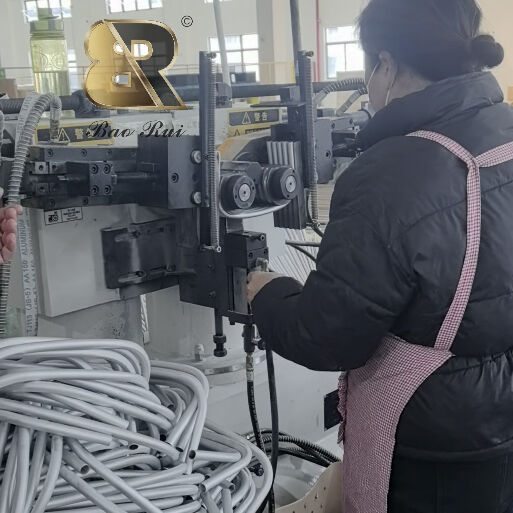
In 2026, China's manufacturing industry will accelerate its upgrading. As a core piece of equipment in industries such as automotive parts and construction machinery, the selection of double-head pipe bending machines directly impacts production capacity and competitiveness. Domestic buyers are focusing on their own needs, selecting cost-effective equipment from four core dimensions to achieve cost reduction and efficiency improvement.
I. Technology Selection: Adapting to the Scenario, High Efficiency and Precision
Under the demand for flexible manufacturing, technology selection should focus on "practicality and suitability". Under the trend of green and low carbon, servo electric models are preferred because they are energy-saving, noise-reducing, and have low maintenance costs; for heavy-duty processing scenarios, energy-optimized hydraulic models can be selected to meet high torque requirements.
II. Cost Control: Calculate the entire lifecycle accounts
Instead of focusing solely on purchase price, we should concentrate on total lifecycle cost. Domestically produced models have a high localization rate for core components, offering better cost-effectiveness than imported equipment and a faster return on investment.
III. Practical Experience: Easy Adaptation to Production
Ease of operation is important; prioritize models with intuitive interfaces and simple operation to reduce employee training costs. The equipment should support quick mold changes to adapt to the pace of multi-variety, small-batch production.In terms of adaptability, it needs to meet the processing requirements of different materials and pipe diameters; compact models are more suitable for workshops with limited space, while also paying attention to equipment operating noise and heat dissipation performance to improve the workshop working environment.
IV. After-sales guarantee: Mitigating production risks
High-quality after-sales service is essential for continuous production. Prioritize brands with extensive local service networks to ensure timely fault response. Confirm that after-sales service includes installation, commissioning, technical training, and regular maintenance, and clearly define the warranty period and warranty policy for consumable parts.Pay attention to the manufacturer's spare parts supply capabilities to ensure that parts can be replaced quickly in the event of a sudden failure; some brands offer remote maintenance services, which can solve technical problems in real time and reduce downtime losses.