 EN
EN

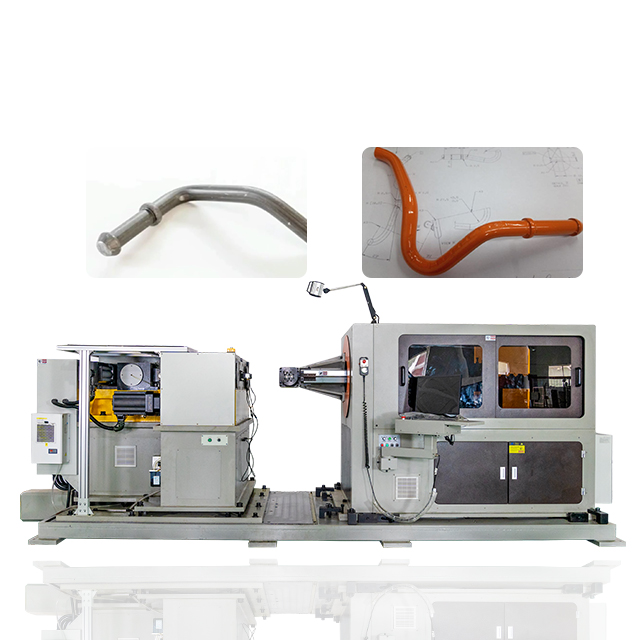
Hydraulic benders age. Seals get stiff. Pumps wear out. Valves respond sluggishly. Oil degrades. It is not about "if" it will age, but rather "how well the designer prepares for that". Some machines may lose their accuracy in two years, others ten years hence will not have changed. It is a question of engineering detail which has been determined long before the machine is built. Building CNC hydraulic pipe benders and their ancillary equipment for twenty years has taught us at Baorui how to mitigate degradation by designing against it on five fronts simultaneously.
Why Hydraulic Systems Naturally Degrade Over Time
Hydraulic system degradation is not a design fault; it is a physical fact. Hydraulic oil slowly loses viscosity and heating up each time it is pumped. Valve lands wear to the bore when shifting (millionths of an inch). Cylinder rods wear against cylinder bores (again millions of an inch). Individual wears are minuscule; but accumulate to hundreds of millions of actuations. This adds up: reduced pressure, reduced speed, poor angle precision, and failure of some form. These are the stages of hydraulic component "aging," and just when they are reached depends on how the engineer has designed for that outcome.
How Pump Selection Determines Long Term Stability
Piston pump wears at a slower rate because its component clearances self-adjust for wear thanks to spring loaded mechanisms. Gear pump wear will cause significant drop in flowrate because the tips of the teeth and their casings are worn down. Machines using gear pumps may be producing adequate bending pressure for 2 years and taking 20 percent more time for cycling at 5 years due to poor pump flow. Durable benders use generously oversized pumps working below 70% of their capacity (vs 95%) to prevent heat from buildup and decrease the rate of wear.
The Critical Role of Filtration in Preventing Progressive Wear
Debris particles destroy hydraulic systems. Even one minuscule particle in a valve spool can cause inconsistent angle bend. Millions of them entering the pump are the same as pumping rocks through its guts expecting oil to come out. Good hydraulic system filtration protects components from wear by preventing those particles from reaching their targets. Good systems have a high beta ratio filter with a return line, a pressure line and sometimes a case-line filter and a baffle to settle solid contaminants in the reservoir. It is too easy to ignore filters, but well-designed benders have easy to access filters that show the condition of the fluid with a simple look or an electronic reading.
How Seal Material Choices Delay Leakage Failures
The most readily observable sign of hydraulic system age is leaky seals. All cylinders will eventually drip, all valves will weep. When this happens depends on the seal and its retainer design. Simple nitrile rubber seals will begin hardening very quickly from heat whereas polyurethane seals are quite wear resistant although their retainer glands require greater precision. Fluorocarbon seals are highly heat tolerant at increased expense. Durable benders use gland designs that incorporate backup rings to support the seal and a gland with a small opening to resist extrusion. Hydraulic bender rods and cylinders are polished incredibly smooth to reduce the initial wear on their seals. All of these small engineering details ensure thousands of extra hours before leakage is noticed.
How Baorui Engineers Against Degradation
Here at Baorui, normal hydraulic system degradation is unacceptable; therefore we design against it. All of our CNC hydraulic pipe benders utilize slow turning piston pumps at a controlled and conservative percentage of capacity, a full complement of high beta ratio filters with return line, pressure line and case drain filters, as well as an adaptable closed-loop control. Seals are specifically selected according to operating conditions and our cooling systems are built beyond what is technically necessary. Operator control and maintenance information is always readily available and clear to ensure longevity. Twenty years of experience building machines, from individual components to fully integrated systems, across the auto parts industry, medical device sector, and furniture manufacturing has convinced us that the long service life of any machine rests on its design and execution.