EN


Baorui Machinery Provides On-Site Commissioning for a Headrest Production Line in North Africa
Baorui Machinery sent its engineering team to the factory of a Tier 1 automotive component supplier in North Africa to install and commission an automated headrest production line. The project covers a complete production route for automotive headrest stems, with a pipe bending machine connected to spinning, weld-line detection, notching, pressing, marking and final inspection.
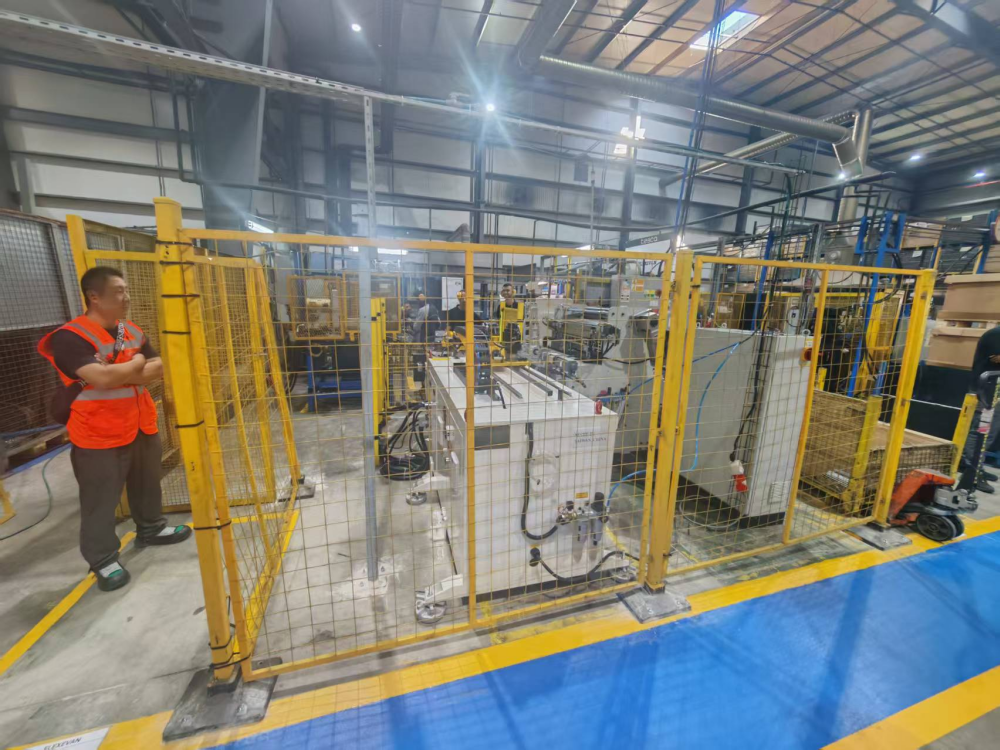
On-Site Installation and Commissioning Support
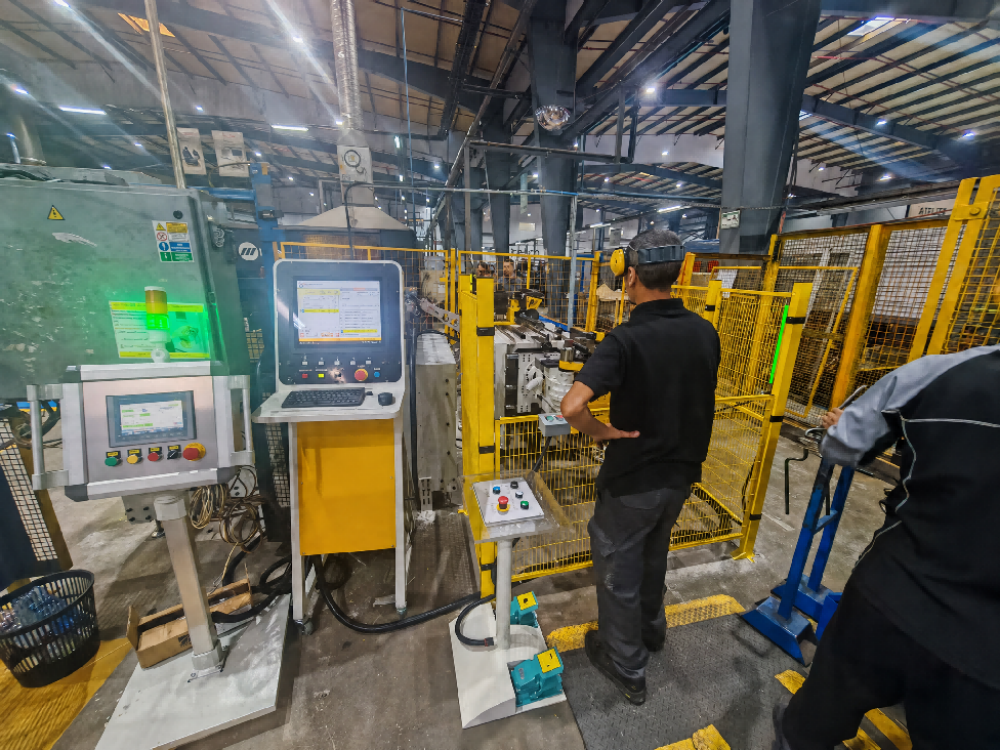
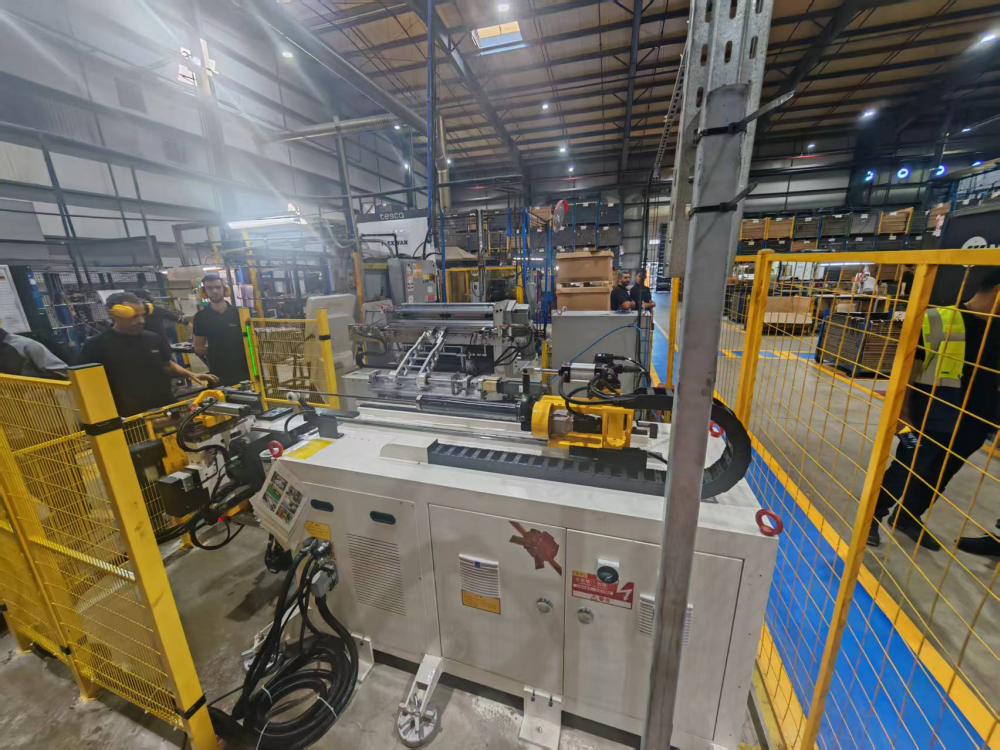
For this project, Baorui Machinery’s engineering team worked at the customer’s factory to support installation and commissioning of the production line. The on-site work covered equipment positioning, mechanical and electrical connection checks, pipe bending setup, tooling alignment, robot transfer coordination and trial production. The team also helped verify the sequence between the bending machine, notching machine, press machine, marking machine and inspection fixture.
On-site commissioning allows problems to be identified in the actual production environment rather than only during separate machine testing. It also helps the customer’s operators understand the HMI, loading sequence, safety procedures and daily operating points. This project reflects Baorui Machinery’s ability to provide on-site technical support for automotive component factories and integrated tube-processing lines.
A Complete Headrest Stem Manufacturing Process
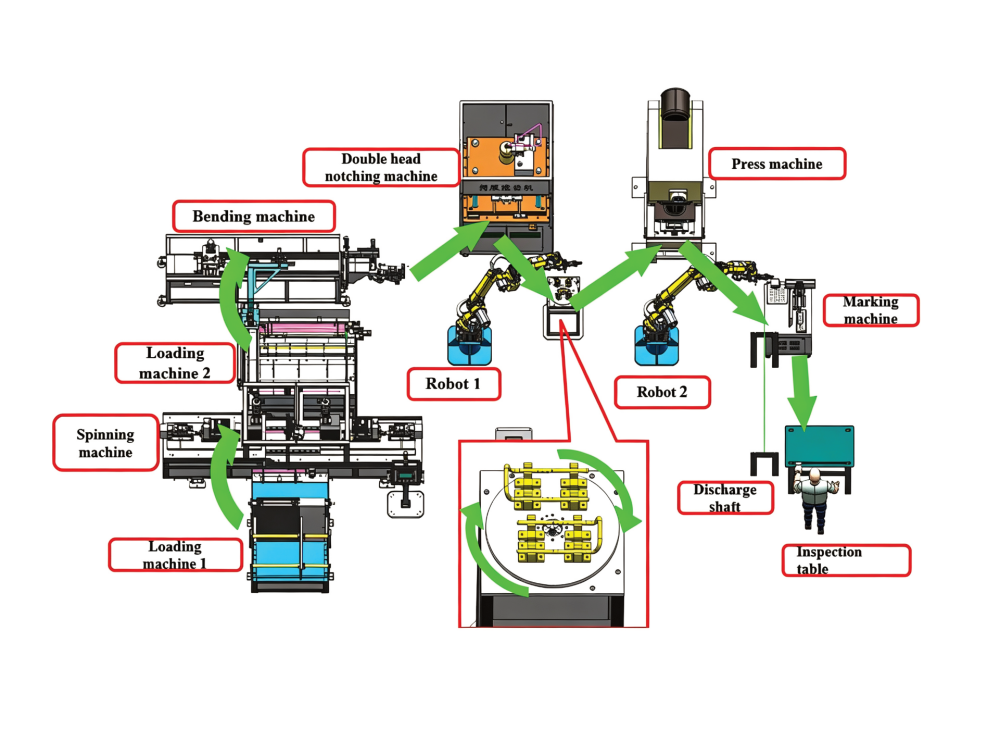
The production line is arranged in a clear sequence. Tubes are first loaded into the line and processed by a spinning machine. After spinning, the tube is transferred to a second loading station, passes through weld-line detection and is then moved to the pipe bending machine. The bent tube continues through notching, transfer, pressing, laser marking and dedicated checking before becoming a finished headrest rod.
This process is important for automotive suppliers because the tube must keep the correct position and orientation during every transfer. The pipe bending machine is therefore not an isolated workstation. It is one of the core forming stations in a connected production system.
1. Production Line Layout and Workflow
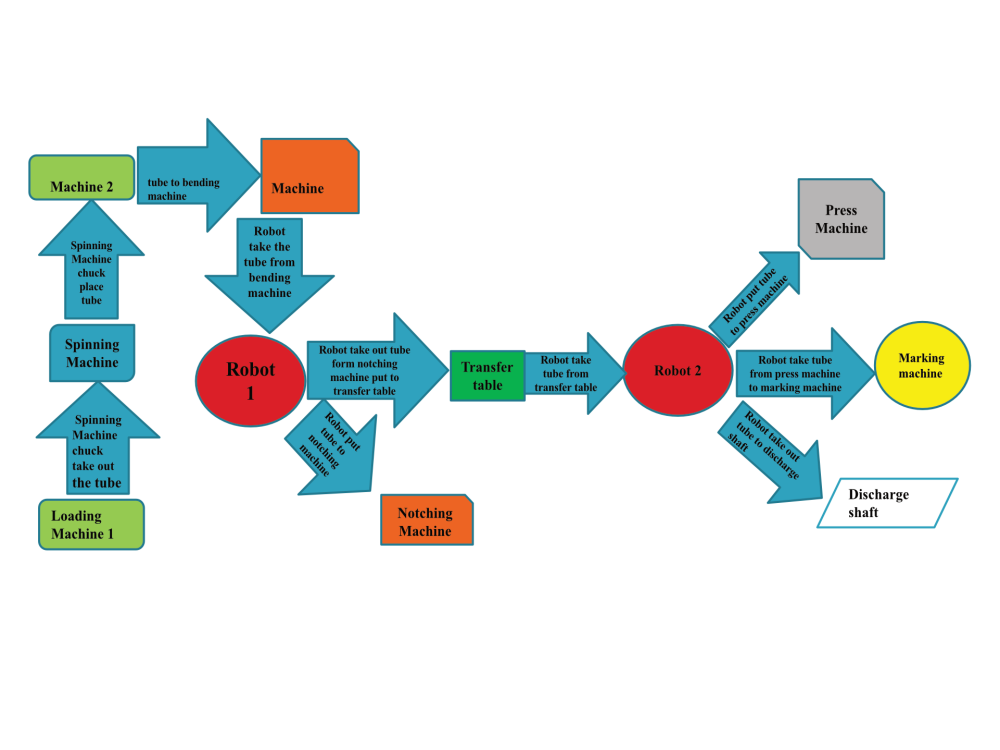
The production line includes Loading Machine 1, a spinning machine, Loading Machine 2, weld-line detection, a pipe bending machine, Robot 1, a double-head notching machine, a transfer table, Robot 2, a press machine, a marking machine, a discharge shaft and an inspection table.
The workflow is divided into two transfer stages. The first stage moves the tube from spinning and detection to bending and then to notching. After notching, the transfer table changes the workpiece position so that Robot 2 can move it to the press machine. The second stage sends the pressed tube to the marking machine and then to discharge and final inspection.
2. Tube Loading and Spinning
The process begins at the stock rack of Loading Machine 1. The rack stores the tubes before production. A splitting mechanism separates the tubes one by one, and a pneumatic chuck grips each tube and places it into the spinning machine.
The spinning operation prepares the tube before bending. After spinning is completed, the chuck removes the tube and transfers it to the stock rack of Loading Machine 2. This buffer supports the next stage and creates a controlled handoff between spinning and bending.
3. Weld-Line Detection and Pipe Bending
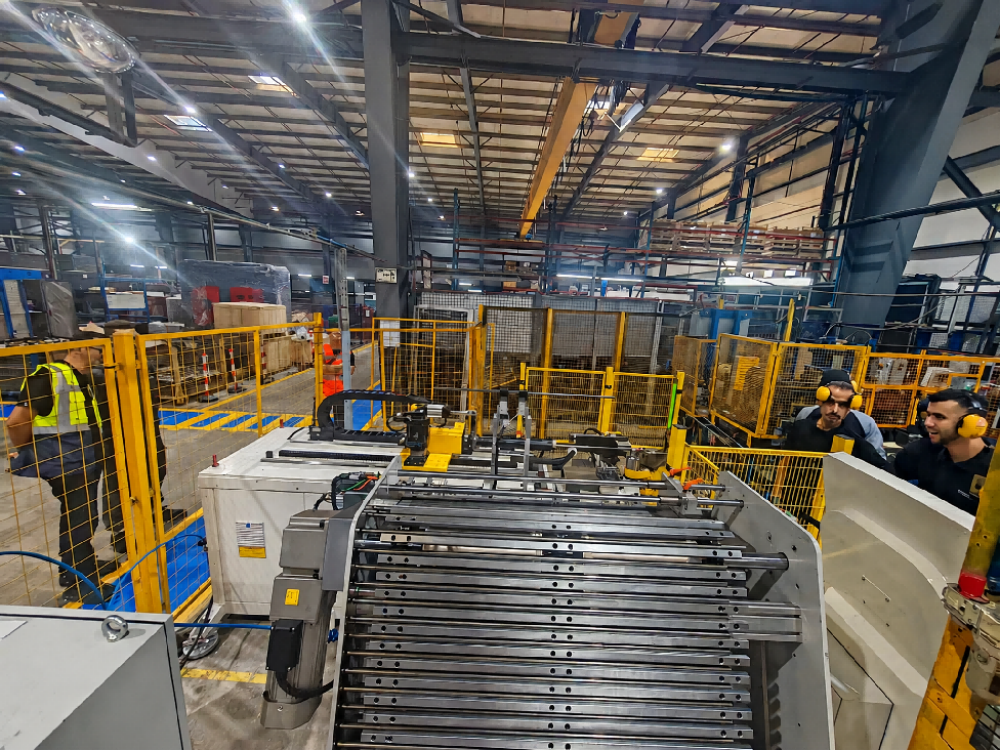
Loading Machine 2 takes the spun tube from the stock rack and sends it through weld-line detection. After detection, a truss grab transfers the tube to the pipe bending machine. This sequence is designed to control the tube position before bending, which is important for consistent forming of automotive headrest stems.
The pipe bending machine creates the required headrest stem shape. After bending, Robot 1 picks up the formed tube and transfers it to the double-head notching machine. In this line, bending is directly connected with the next forming operation, reducing the need for manual movement between machines.
4. Notching and Transfer Table
Robot 1 places the bent tube into the double-head notching machine. After notching is completed, Robot 1 removes the tube and places it on the transfer table.
The transfer table rotates the workpiece to the other side of the line. This change of position allows Robot 2 to pick up the tube and deliver it to the press machine. The transfer table is therefore an important connection point between Robot 1 and Robot 2.
5. Pressing, Marking and Final Inspection
Robot 2 takes the notched tube from the transfer table and places it into the press machine. After pressing, Robot 2 transfers the part to the marking machine. The marking operation provides identification information on the tube according to the customer’s requirements.
After marking, the robot moves the part to the discharge shaft. Each finished rod is then checked in a dedicated checking fixture. If the rod does not seat correctly in the fixture, it can be corrected immediately. This final check helps confirm that the finished headrest rod matches the required shape before leaving the line.
6. Finished Headrest Rod Application
The completed parts shown in the project materials are formed headrest rods with multiple bends, notches and pressed sections. The finished rods are checked against the component shape and dedicated fixture before packing or moving to the next production stage.
This project demonstrates how a pipe bending machine can be integrated into a complete automotive tube forming line. It also shows that successful delivery depends on more than supplying individual machines. Equipment integration, on-site commissioning and production support are important when the line is installed in a working automotive component factory.
For similar applications, Baorui Machinery can evaluate the tube drawing, material, dimensions, bending sequence, notching and pressing requirements, marking method and final inspection method, then provide coordinated technical support during installation and trial production.
Discuss Your Headrest Stem Bending Project
Are you looking for a pipe bending machine or a complete headrest production line? Send us your part drawing, tube specifications and production requirements. Our engineering team can review the bending process, propose the required equipment and support installation, on-site commissioning, trial production and operator guidance at your factory.